Main Benefit
A Scope Built From Your Roof
Every repair, primer, and coat thickness in the scope ties back to a photo or test from your own roof walk.
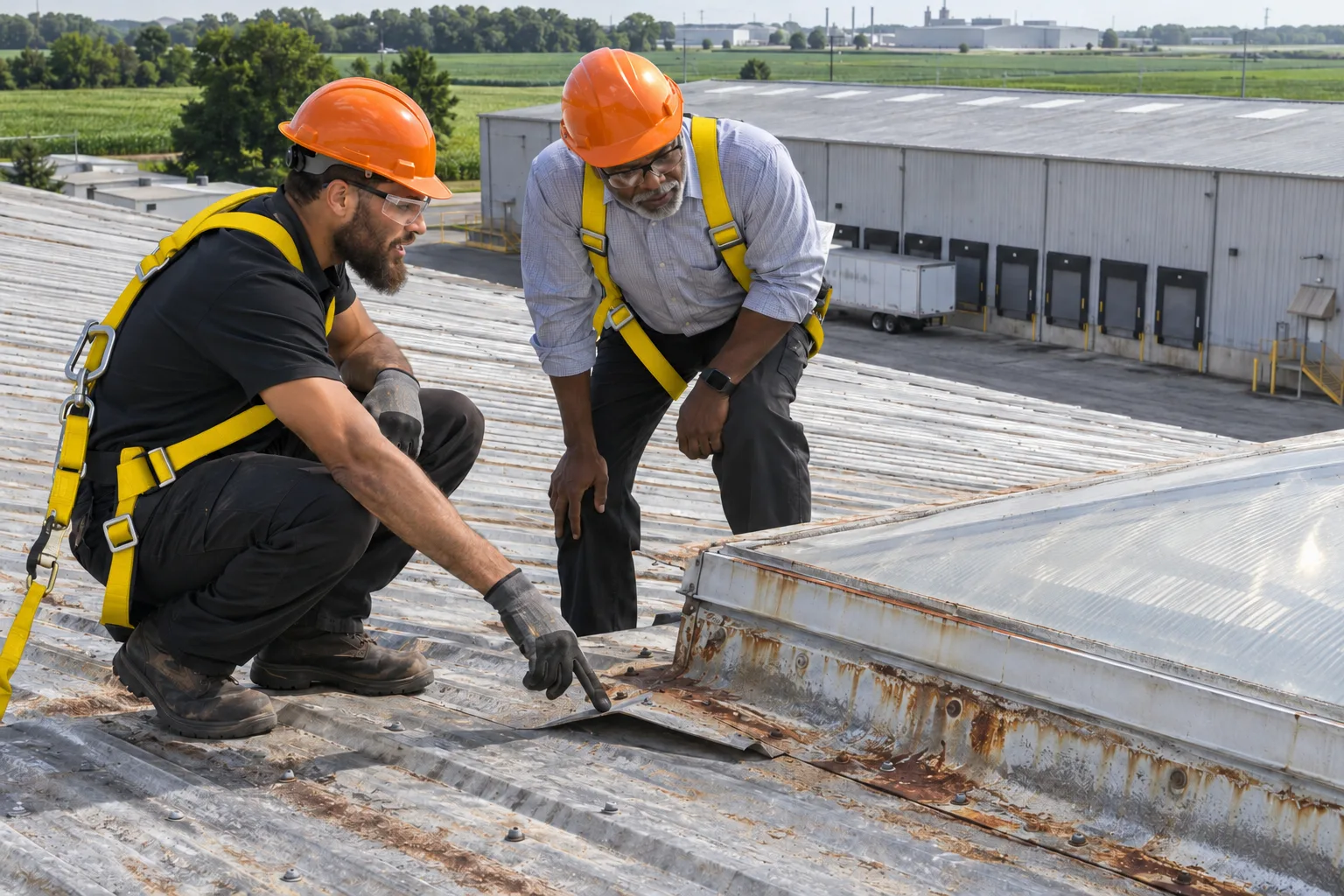
Peru metal roof coating starts with a full roof inspection and adhesion test, so the cleaning, primer, and coating are chosen for your panels.
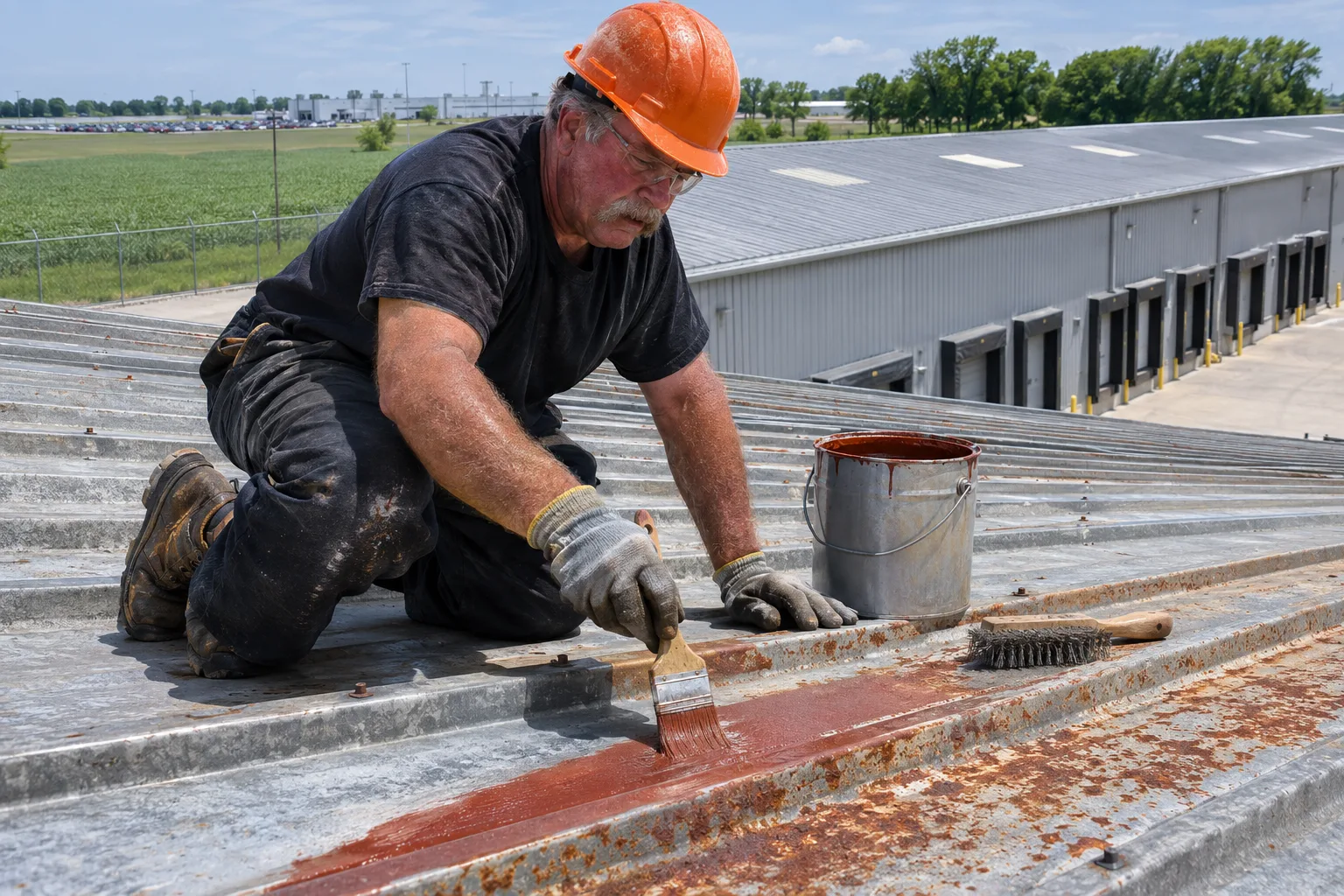
Peru metal roof coating decisions come out of the roof walk. Rust depth, screw grip, lap condition, skylight and curb flashing, gutters, and ponding areas are each checked and photographed.
We also core suspect spots for wet insulation and pull a small adhesion test. Those results set the cleaning method, primer, coating, and thickness written into your scope.
These are the findings that change a coating plan most often on the roofs we inspect around Peru.
Wet insulation from an old leak stays hidden under panels that look fine from above.
Cores locate the wet area, and that insulation is replaced before coating so moisture stays out.
A previous coating applied over dirty steel lets go when the adhesion test pulls it.
Loose coating is stripped back to a firm edge, and the bare area is primed.
Rust and repeated tightening strip the threads in the purlin until the screw no longer grips.
Each spinning screw gets an oversized replacement, logged on the inspection map.
Older fiberglass skylights yellow and crack, and the cracks leak in heavy rain.
Cracked skylight panels are swapped and the new frames flashed before coating.
Past leaks were chased with caulk and tar along gutter seams until the patches overlap.
Old patches are scraped off to bare metal, and the seams are resealed and coated as one detail.
An inspection-led job puts the money where the roof needs it and leaves a clear record behind.
Every repair, primer, and coat thickness in the scope ties back to a photo or test from your own roof walk.
Adhesion tests before the job catch surfaces that would peel later.
Cores locate wet insulation before it gets sealed under a new coating.
Photos and the marked inspection map stay with the building for future work.
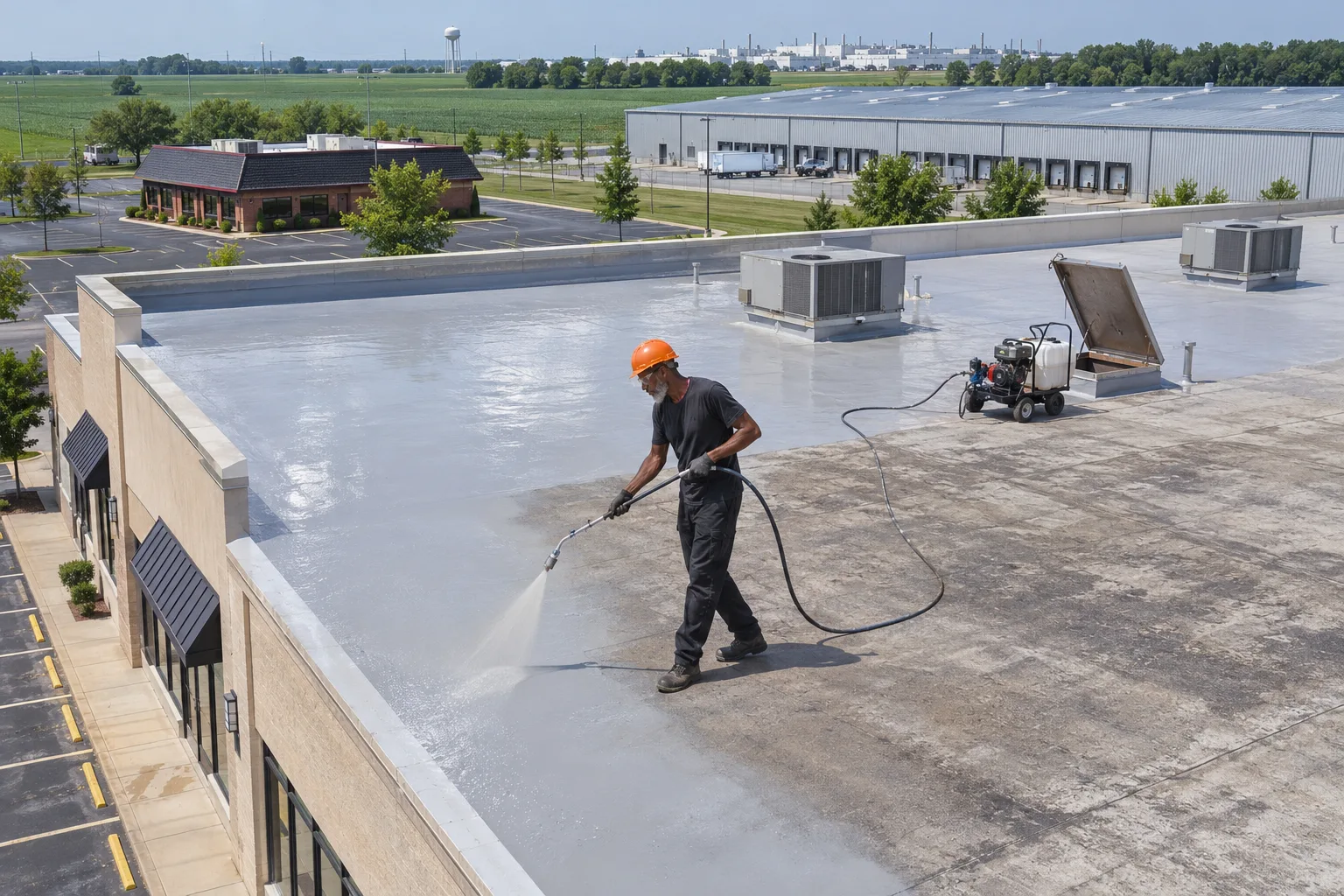
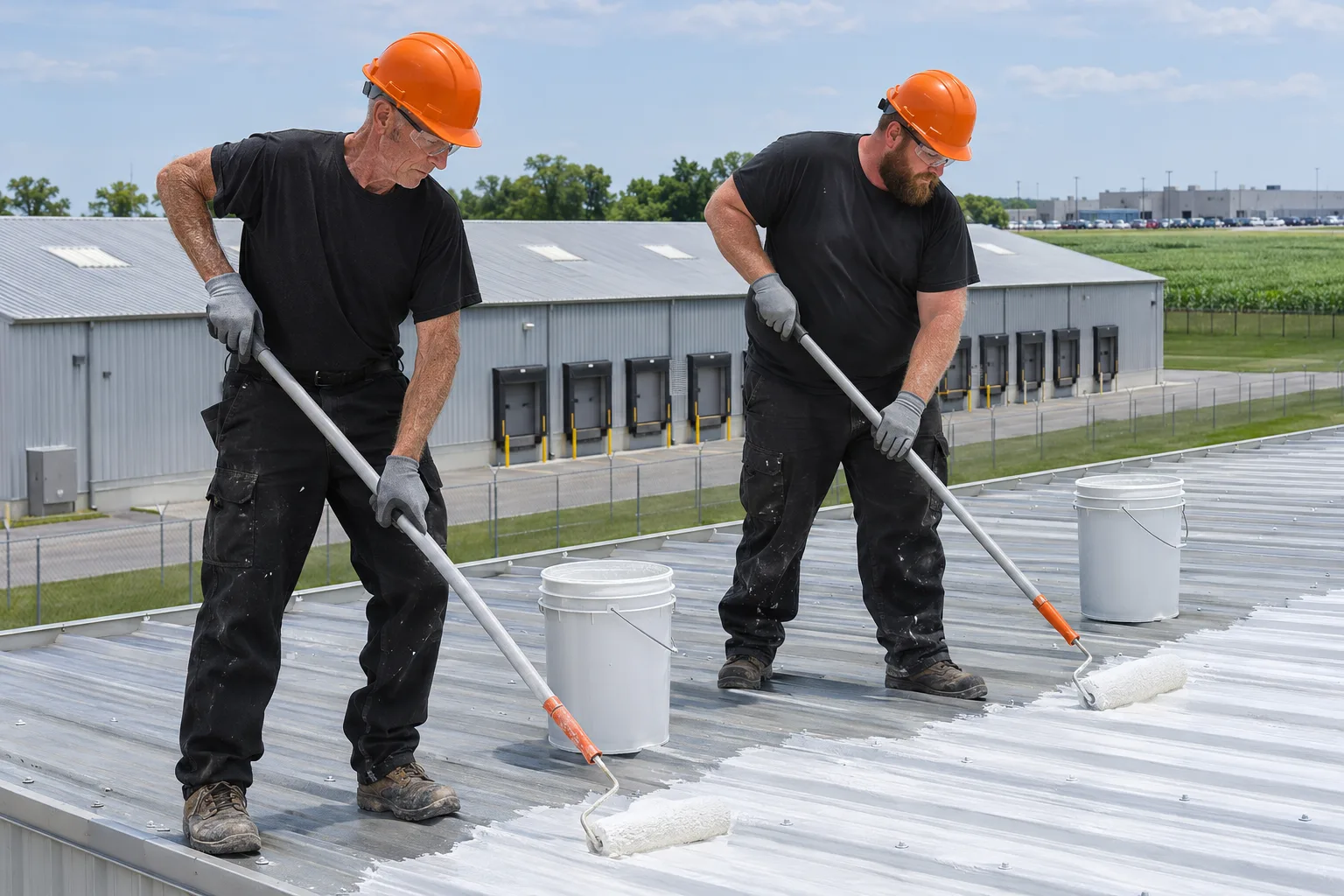
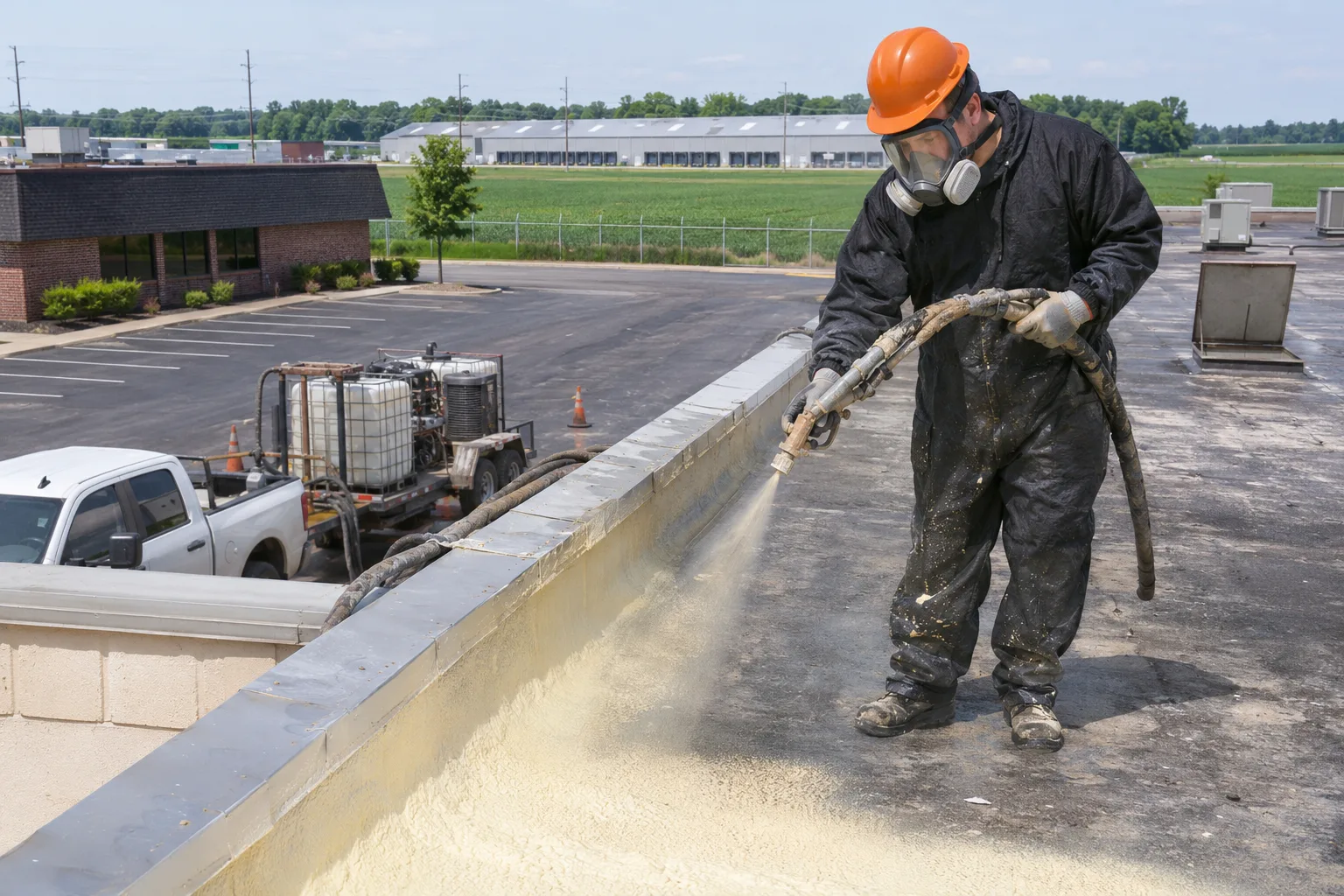
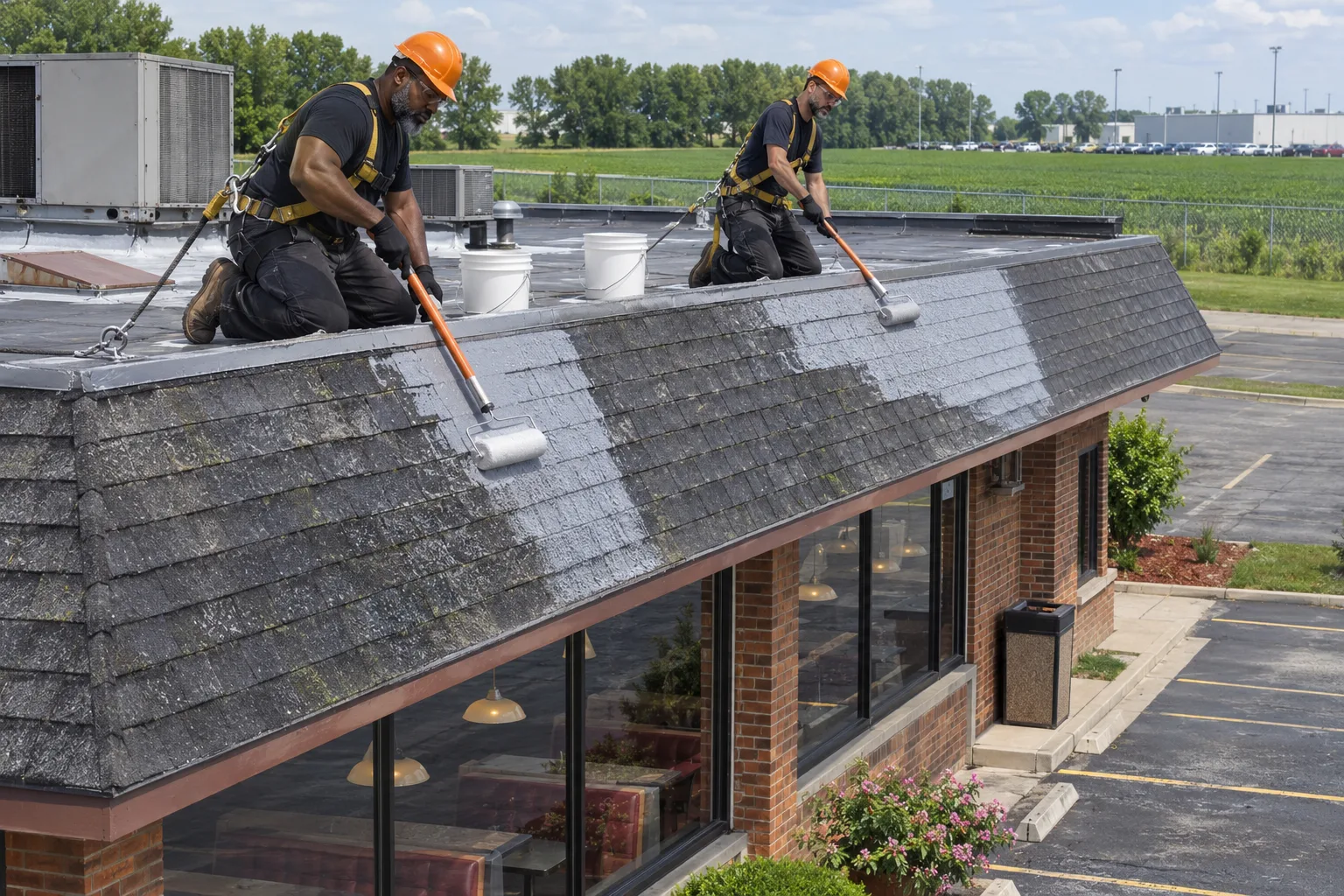
After the inspection, one of these five systems goes on a Peru roof. Here is where each fits.
| System | Where It Fits | Check First |
|---|---|---|
| Commercial Metal Roof Coating | Exposed-fastener and standing seam panel roofs | Screw grip, lap gaps, rust depth |
| Silicone Roof Coating | Low-slope and flat roofs that hold water | Ponding depth, old surface, wet insulation |
| Acrylic Roof Coating | Sloped panels that drain quickly | Drainage and the weather window |
| Spray Foam Roofing | Dry, tight roofs that also need insulation | Dry substrate, wind, overspray risk |
| Shingle Roof Coating | Asphalt shingles still flat and attached | Curling, granule loss, deck firmness |
Book a roof walk in Peru. You get photos, test results, and a written scope before any decision.
Inspection carries more weight on these jobs, and every later step follows its findings.
We photograph every panel run, probe rust, pull screws, core suspect areas, and run an adhesion test.
You get the inspection map, photos, and test results, with the repair list and the system they point to.
Wet insulation, failed screws, peeling coating, and cracked skylights are handled in the order the map lists.
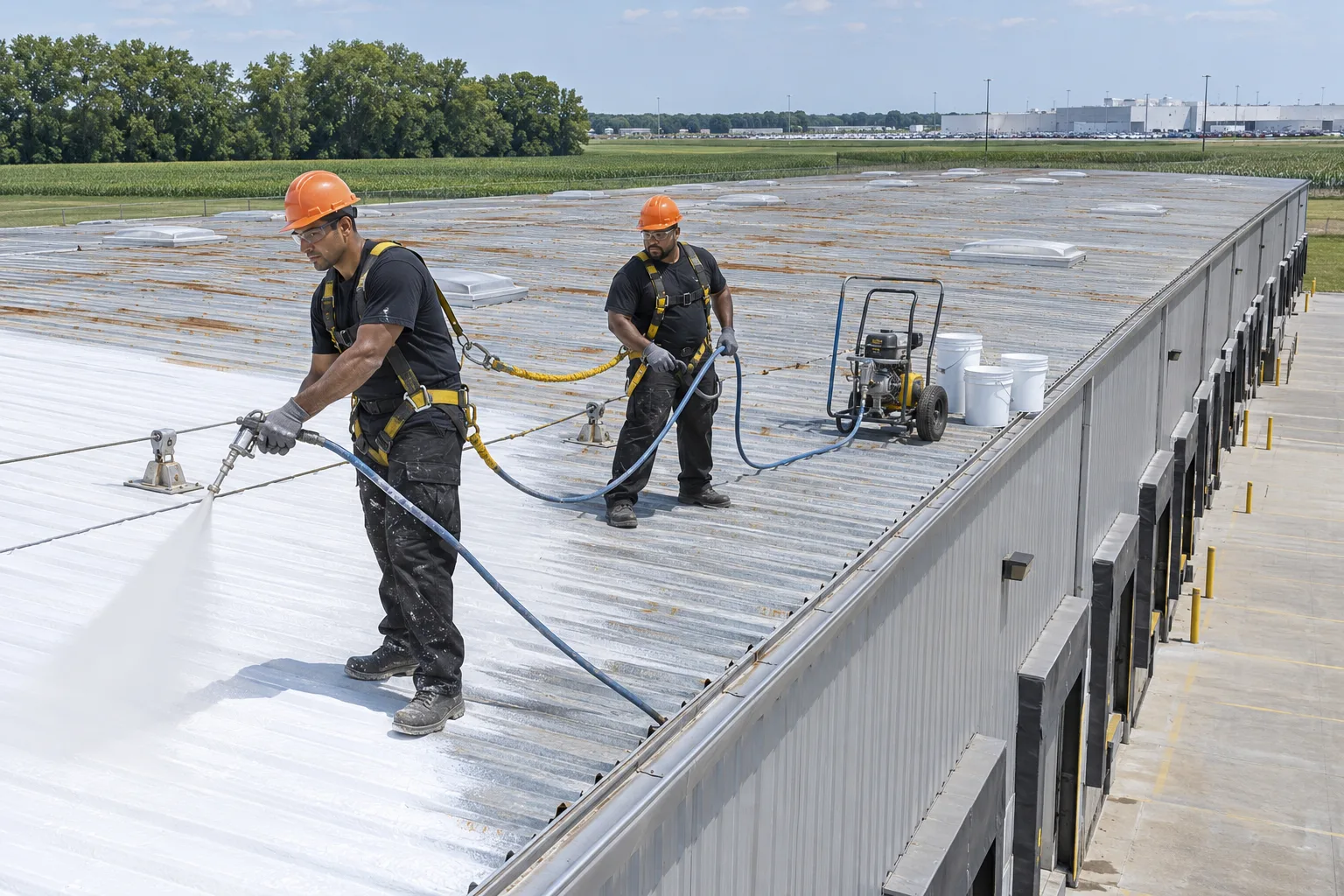
Primer and coating go on as the scope specifies, detail coats first and the field coat after.
Thickness readings are added to the same map, so the record shows what went where.
Is your building near Peru? We inspect and coat metal roofs in the towns below too; for anywhere else, call us or send us a message.
What Peru owners ask about the inspection and what comes after it.
Every part of the roof that affects how long a coating holds gets checked: rust depth, loose or missing screws, open laps, skylight and curb flashing, gutters, and ponding areas. Wet insulation is located with cores, and a small adhesion test runs on the panels. Those findings set the cleaning, primer, coating, and thickness.
Yes. Every Peru roof walk produces a marked inspection map with photos and test results, and the final thickness readings go on the same map when the job is done.
Coating sits around $2.50 to $4 per square foot in our ballpark, with replacement around $5 to $8. Inspection findings move the figure: wet insulation to replace, peeling old coating to strip, failed screws, and skylights to swap all add to the base coating cost.
We do. Small shops and offices get the same inspection as large roofs, scaled to the building. Call or send the address and roof size to set it up.
You get the findings in writing, with the reasons and the photos behind them. If replacement is the better call for part or all of the roof, the report says so and shows where.
A marked roof map, dated photos of each finding, core and adhesion results, and a written scope with the repairs and coating system they point to. It stays useful even when the work is phased over two seasons.
They give an insurer or buyer a dated, photo-backed record of the roof's condition and the work done. What that means for a claim or a price is their call, so we hand over the files and leave that decision with you.
Book a roof walk and get the findings in writing. The ballpark calculator gives you a starting range today.