Main Benefit
Stored Equipment Stays Covered
Panels stay on the building during the whole job, so machinery, feed, and stock underneath stay dry and in use.
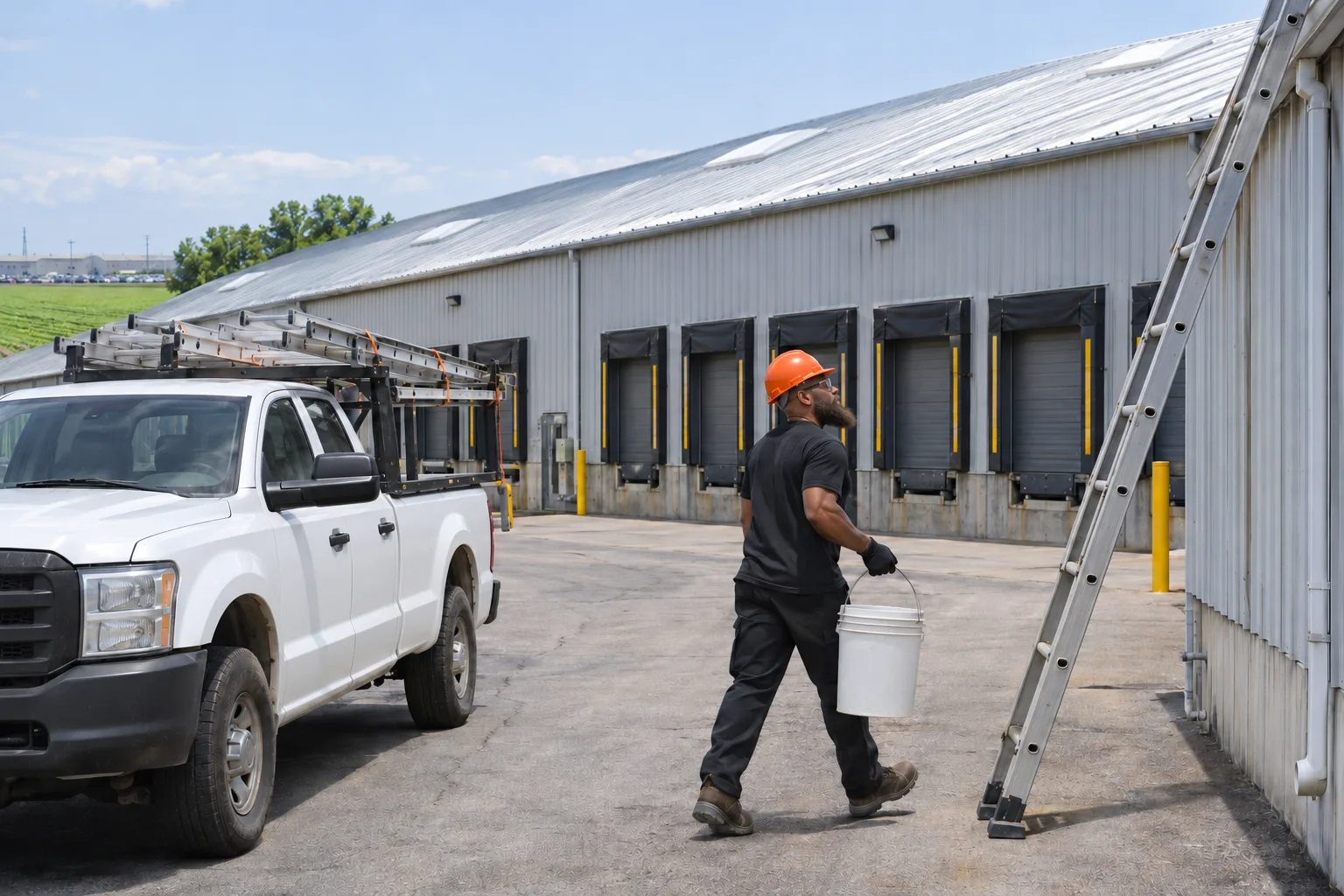
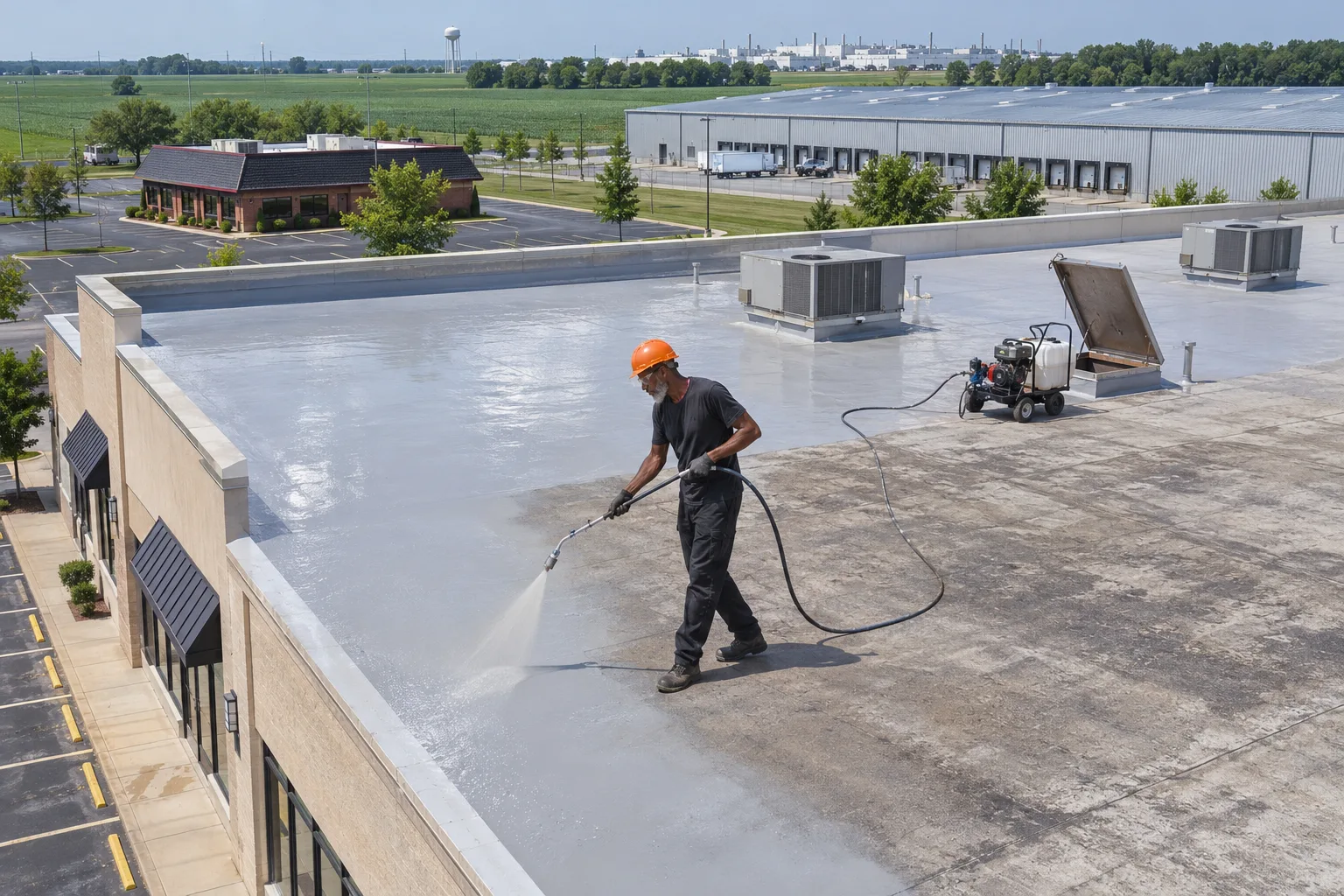
Logansport metal roof coating for equipment, storage, and processing buildings, starting with a deep wash that strips dust and residue off the steel.
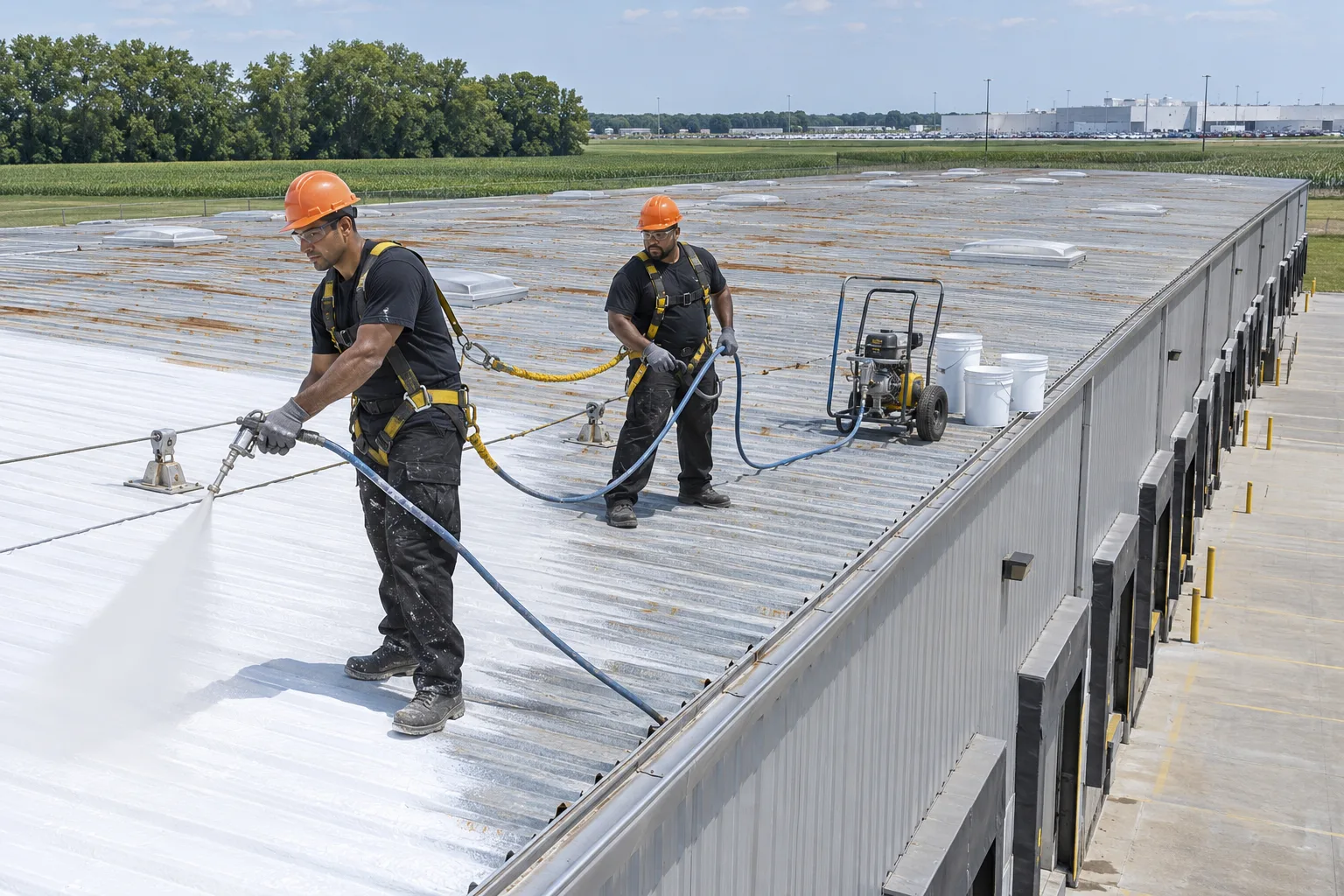
Logansport metal roof coating jobs on processing and storage buildings begin with the dirtiest step. Dust from grain, feed, and equipment settles on the panels and bakes on, and coating will only hold as well as the surface under it.
We wash in several passes, test a patch for adhesion, and wash again where the test fails. Only then does primer go on.
Equipment barns, storage buildings, and processing structures share a few roof problems. Here is what we find on them.
Grain and feed dust mixes with rain and dries into a crust that coatings peel off.
Repeated washing and a degreaser where needed take the panels back to clean steel.
Dust holds moisture against the steel long after the rest of the roof dries.
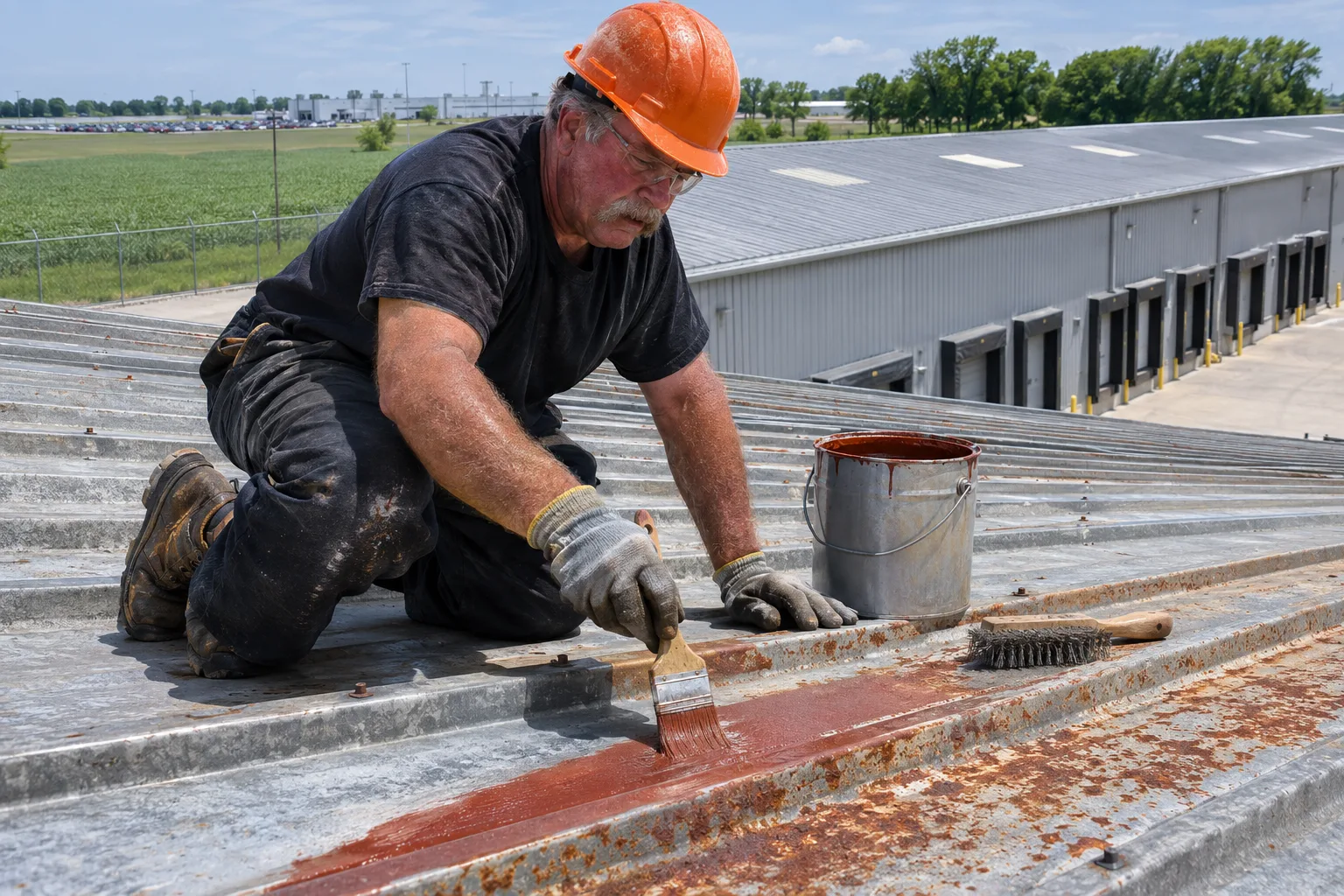
Rust found under the crust gets ground and primed before any coating goes on.
Residue washes into gutters and valleys and slows drainage until water backs up.
Gutters are cleaned out and resealed, and valleys get extra coating thickness.
Older pole-frame buildings have loose trim and screws at the eave and ridge.
Trim is refastened, closures replaced, and the eave and ridge laps sealed before coating.
Translucent panels coated in dust look like steel and get stepped on during roof work.
Every skylight is located and marked before anyone walks the roof, then cleaned, flashed, and coated around.
On a working farm or processing building, coating protects what is stored below without taking the roof apart.
Panels stay on the building during the whole job, so machinery, feed, and stock underneath stay dry and in use.
Primer under the coating stops corrosion that dust and moisture started.
Smooth coating sheds dust in the rain better than weathered, chalky paint.
Light topcoats keep summer heat off stored materials and equipment.
Most Logansport farm and processing roofs take a metal roof coating system. The table compares all five options.
| System | Where It Fits | Check First |
|---|---|---|
| Commercial Metal Roof Coating | Exposed-fastener and standing seam panel roofs | Screw grip, lap gaps, rust depth |
| Silicone Roof Coating | Low-slope and flat roofs that hold water | Ponding depth, old surface, wet insulation |
| Acrylic Roof Coating | Sloped panels that drain quickly | Drainage and the weather window |
| Spray Foam Roofing | Dry, tight roofs that also need insulation | Dry substrate, wind, overspray risk |
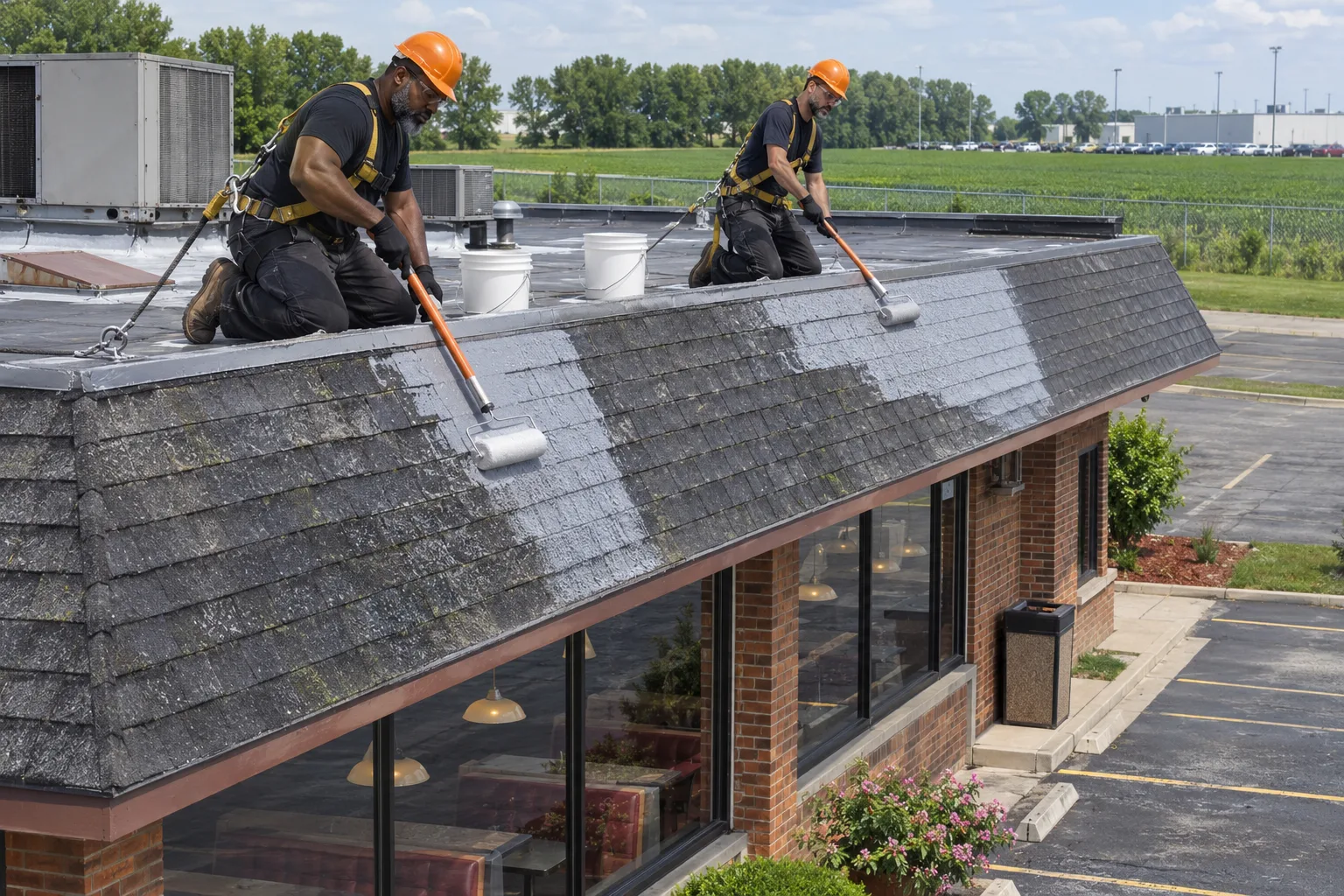
| Shingle Roof Coating | Asphalt shingles still flat and attached | Curling, granule loss, deck firmness |
Send a photo of the roof and the building use. We tell you how much cleaning it needs before coating.
The cleaning step is longer here, and the rest of the job follows from it.
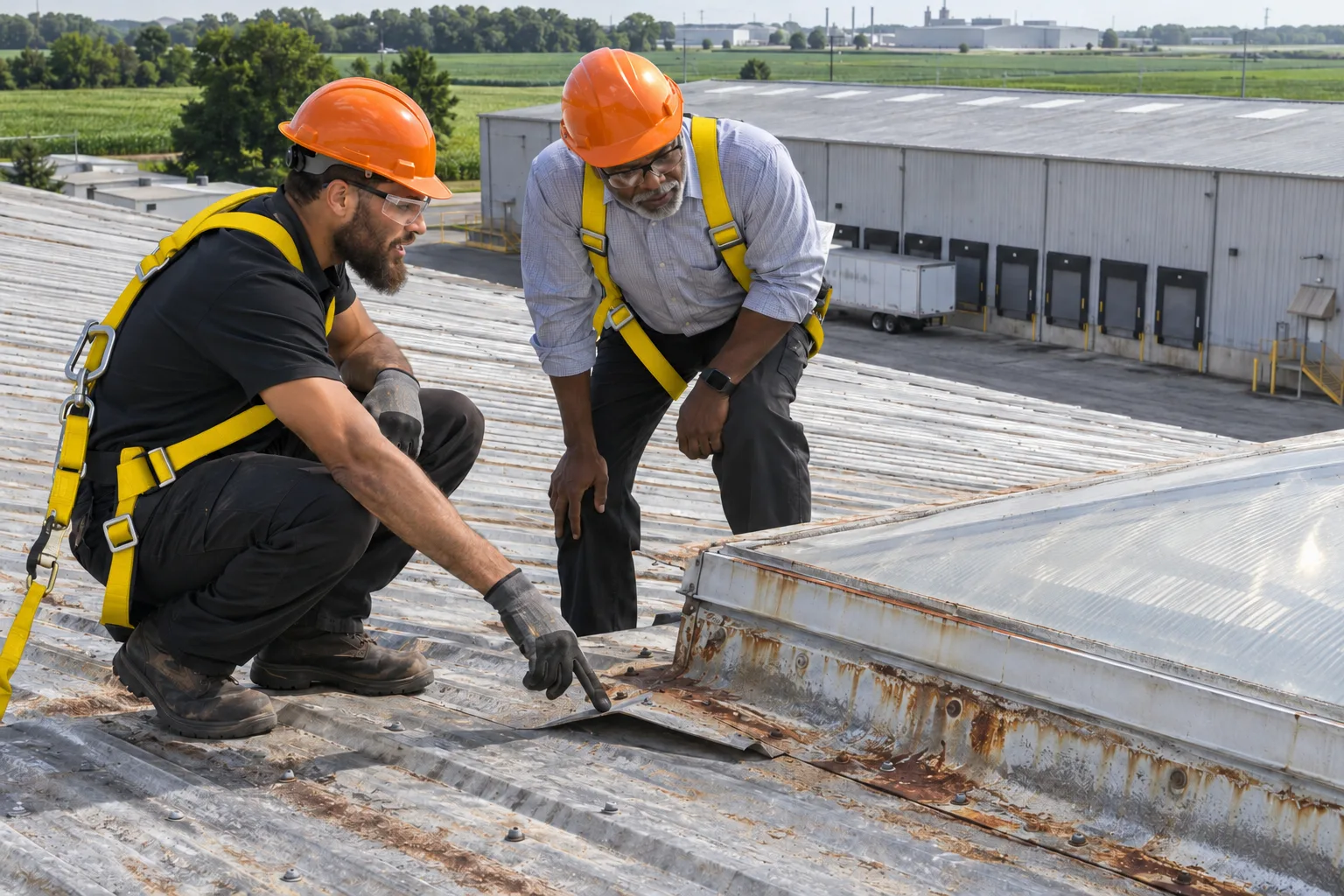
We walk the roof, scrape a few dusty spots to see the steel beneath, and check screws, laps, trim, and gutters.
Washing repeats until the panels come up clean, with a degreaser on oily residue near vents and equipment.
A small coated patch is pulled to confirm the surface is clean enough; failed spots are washed again.
Screws, trim, and laps are fixed, and rust-inhibiting primer goes on every rusted area.
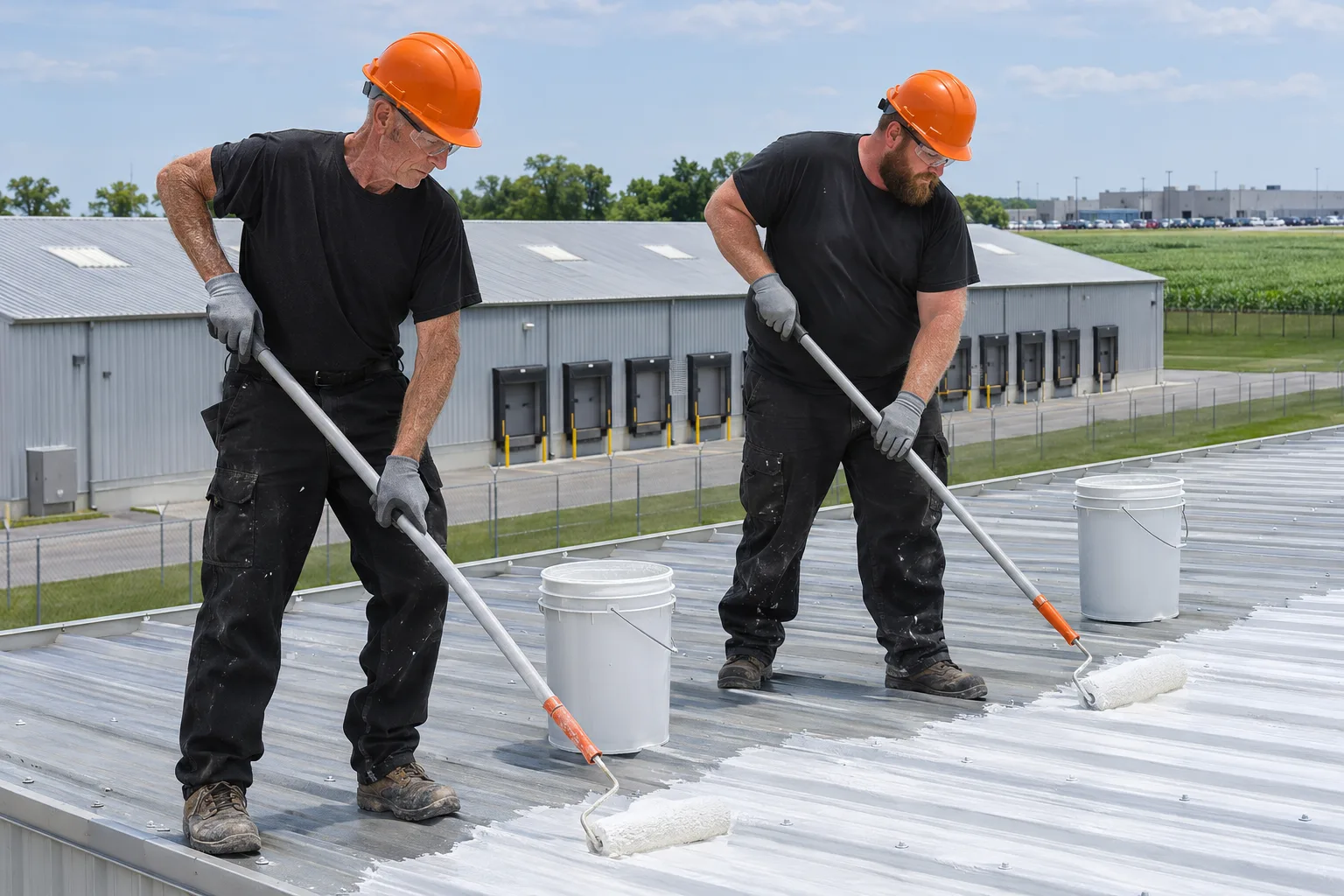
Detail coats at laps and penetrations come first, then the field coat goes on to the scope thickness.
Farm buildings, storage, and processing plants in these towns get the same coating work as Logansport. Building elsewhere? Call us or send us a message.
What Logansport owners ask about coating farm and processing roofs.
In many cases, yes. Equipment barns, storage buildings, and processing structures around Logansport take a coating when the panels and framing hold up. Coating seals leaking screws and laps and protects rusting steel with the panels left in place. Dusty or residue-covered roofs get a thorough cleaning first so the coating bonds.
Equipment barns, grain and feed storage, processing buildings, shops, and the offices and stores in town. Each gets the same inspection; the cleaning step and system choice change with what the building does.
Yes, for commercial and farm-related buildings in and around Logansport. Call or use the estimate form with the address and rough roof size, and we schedule a roof walk.
Yes. Pole-frame and steel-frame buildings are a large share of what we coat around Logansport. Loose trim, eave gaps, and screws get fixed first, then the panels are coated.
Late spring through early fall, when the roof is dry and nights stay above freezing. Many owners pick a window between planting and harvest, when the building is easier to work around.
Once or twice a year, or after harvest when dust is heaviest. A clean coating reflects more sun and lets the spring inspection spot wear early, so a light wash before the walk pays off.
Yes, with planning. Bins, augers, and equipment near the eaves get covered or moved, and spraying stops when wind would carry mist toward them. Rolling replaces spraying along edges close to stored grain.
Tell us what the building is used for and how big the roof is. You get a ballpark range now and a scope after the walk.