Main Benefit
Acrylic Coating on Metal Roofs That Shed Water
Acrylic stretches as steel expands in summer and shrinks in January, so laps and screws stay sealed through Kokomo freeze-thaw cycles.

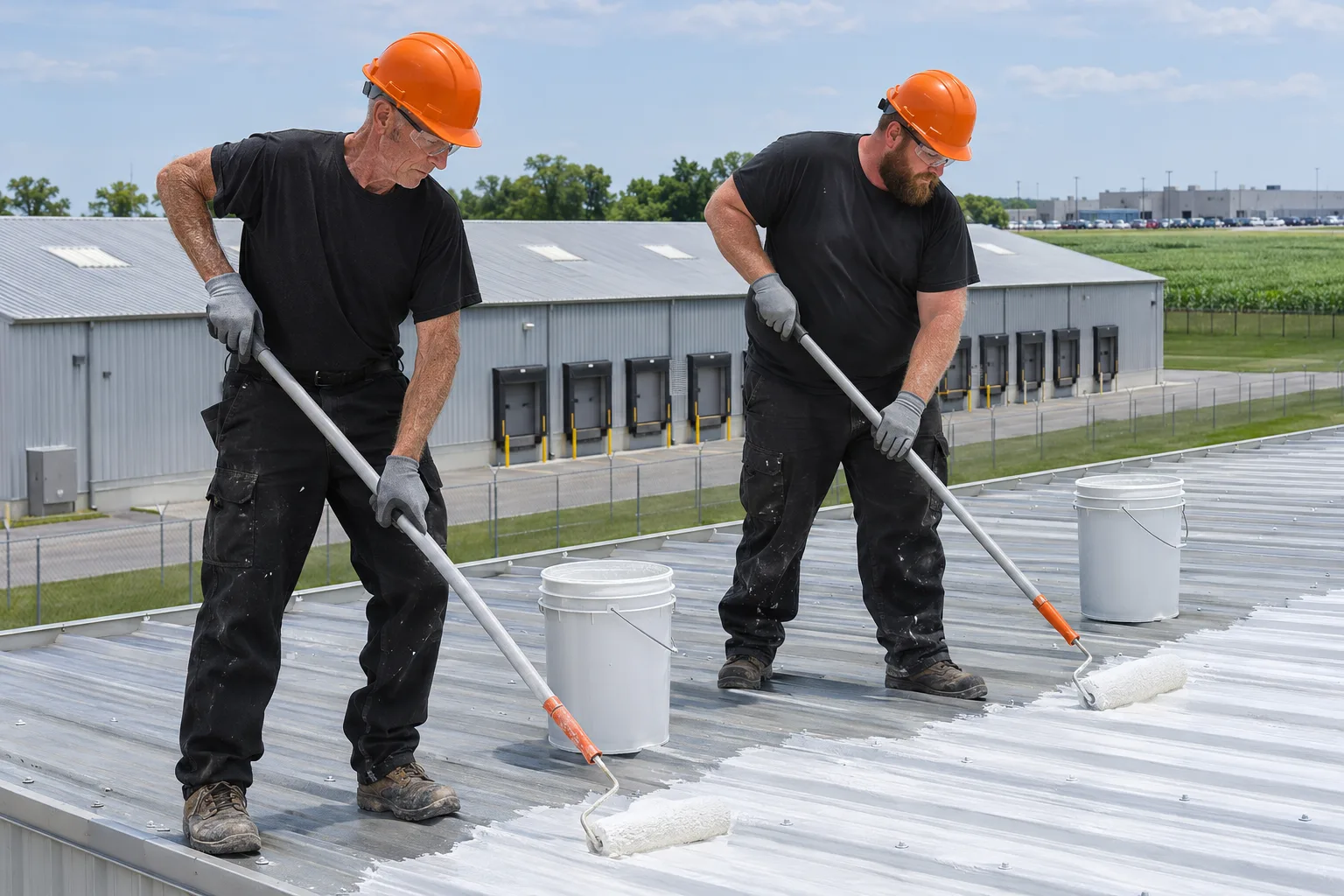
Kokomo acrylic roof coating covers sloped metal roofs that shed water quickly, with two flexible, reflective coats over primed and detailed panels.
Kokomo acrylic roof coating works best on roofs that drain fast. Check yours against these conditions before choosing it.
| Factor | Ready For Acrylic | Choose Another System |
|---|---|---|
| Drainage | Water gone within hours of rain | Puddles that last into the next day |
| Slope | Sloped metal panels | Flat spots and wide valleys |
| Old Surface | Primed steel or old acrylic | Old silicone coating |
| Weather Window | Dry, above-freezing days ahead | Rain or frost due before it cures |
| Foot Traffic | Light and occasional | Busy service paths to equipment |
Acrylic suits roofs whose problems are wear and small leaks, with water moving off quickly.
Ultraviolet light breaks down the factory finish until the panel rubs off white.
We wash off the chalk and lay acrylic over a clean, primed surface.
Scratches and fastener holes expose bare steel that rusts in small spots.
Each spot is brushed and primed so rust stops spreading under the new coats.
Washers harden and crack, so water seeps past the screws during long rains.
Failed screws get replaced, and each row gets a detail coat before the field coats.
Dark or rusted steel soaks up summer sun and radiates heat into the building.
A white acrylic topcoat reflects more sunlight than faded steel and keeps the panels cooler.
Acrylic is the drained-roof choice among the five systems we install around Kokomo. The table compares all five.
| System | Where It Fits | Check First |
|---|---|---|
| Commercial Metal Roof Coating | Exposed-fastener and standing seam panel roofs | Screw grip, lap gaps, rust depth |
| Silicone Roof Coating | Low-slope and flat roofs that hold water | Ponding depth, old surface, wet insulation |
| Acrylic Roof Coating | Sloped panels that drain quickly | Drainage and the weather window |
| Spray Foam Roofing | Dry, tight roofs that also need insulation | Dry substrate, wind, overspray risk |
| Shingle Roof Coating | Asphalt shingles still flat and attached | Curling, granule loss, deck firmness |
On a roof that drains, acrylic gives a flexible, bright finish that is simple to renew.
Acrylic stretches as steel expands in summer and shrinks in January, so laps and screws stay sealed through Kokomo freeze-thaw cycles.
White acrylic keeps panels cooler than bare or rusted steel on hot afternoons.
Recoating means washing the roof and rolling more acrylic over the old film.
Water-based acrylic dries fast in warm weather, so each section reopens soon after its coats.
Send a photo and the roof size. We tell you whether the roof drains well enough for acrylic.
Acrylic depends on weather and prep. These five steps run in order on every acrylic job.
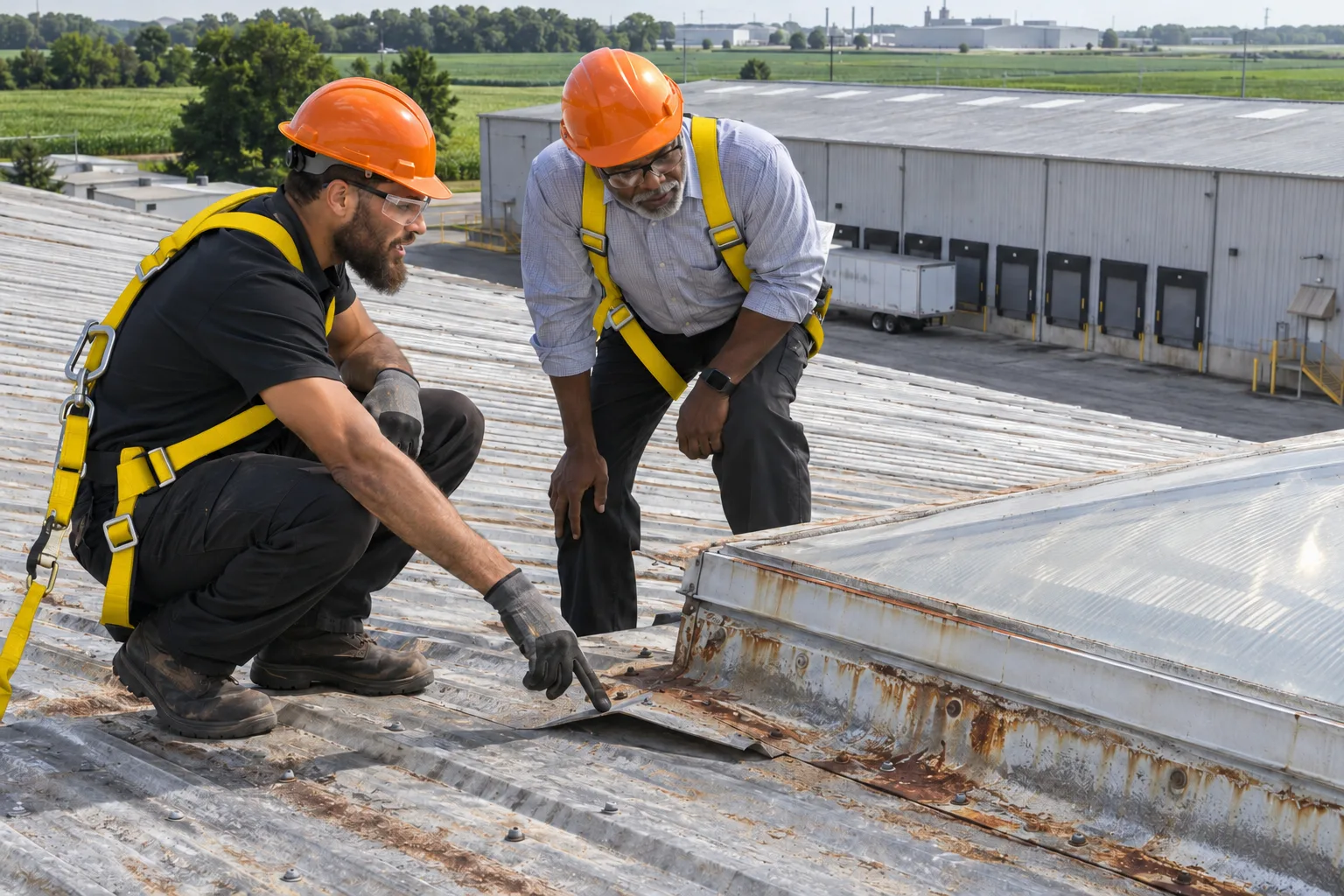
We confirm the roof drains, check every screw row and lap, and look for low spots that call for silicone instead.
Acrylic needs dry days above freezing to cure, so start dates follow the forecast in spring and fall.
Washed panels get rust-inhibiting primer on every rusted or scratched area, and laps get fabric.
One color goes on across the whole field first and is left to dry fully before anything else happens.
Contrasting color shows full coverage, and wet-mil readings confirm the total thickness.
When part of a roof holds water or needs insulation, another system covers that part.
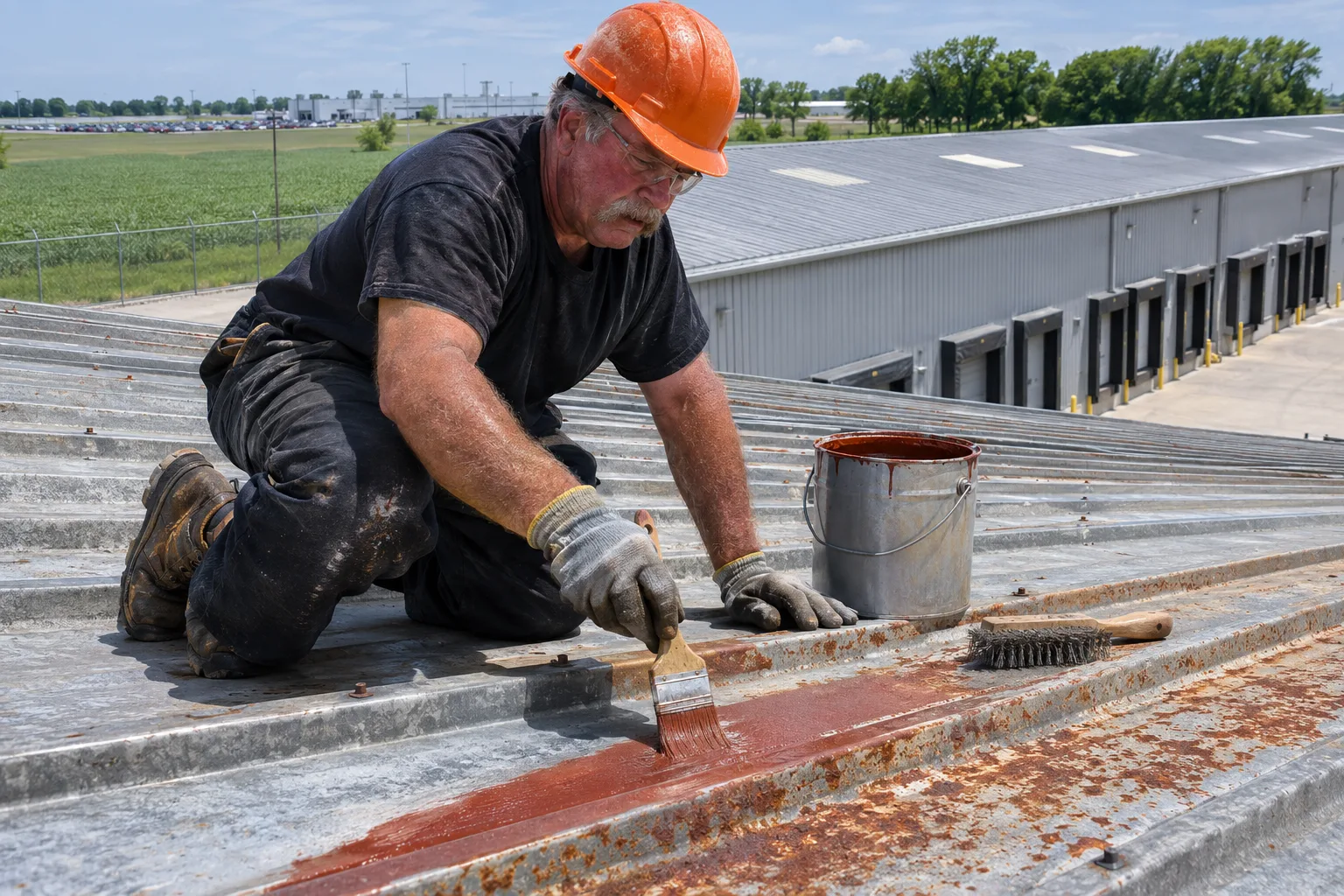
Screws, laps, and rust repaired, then the whole panel roof coated.
Commercial Metal Roof Coating details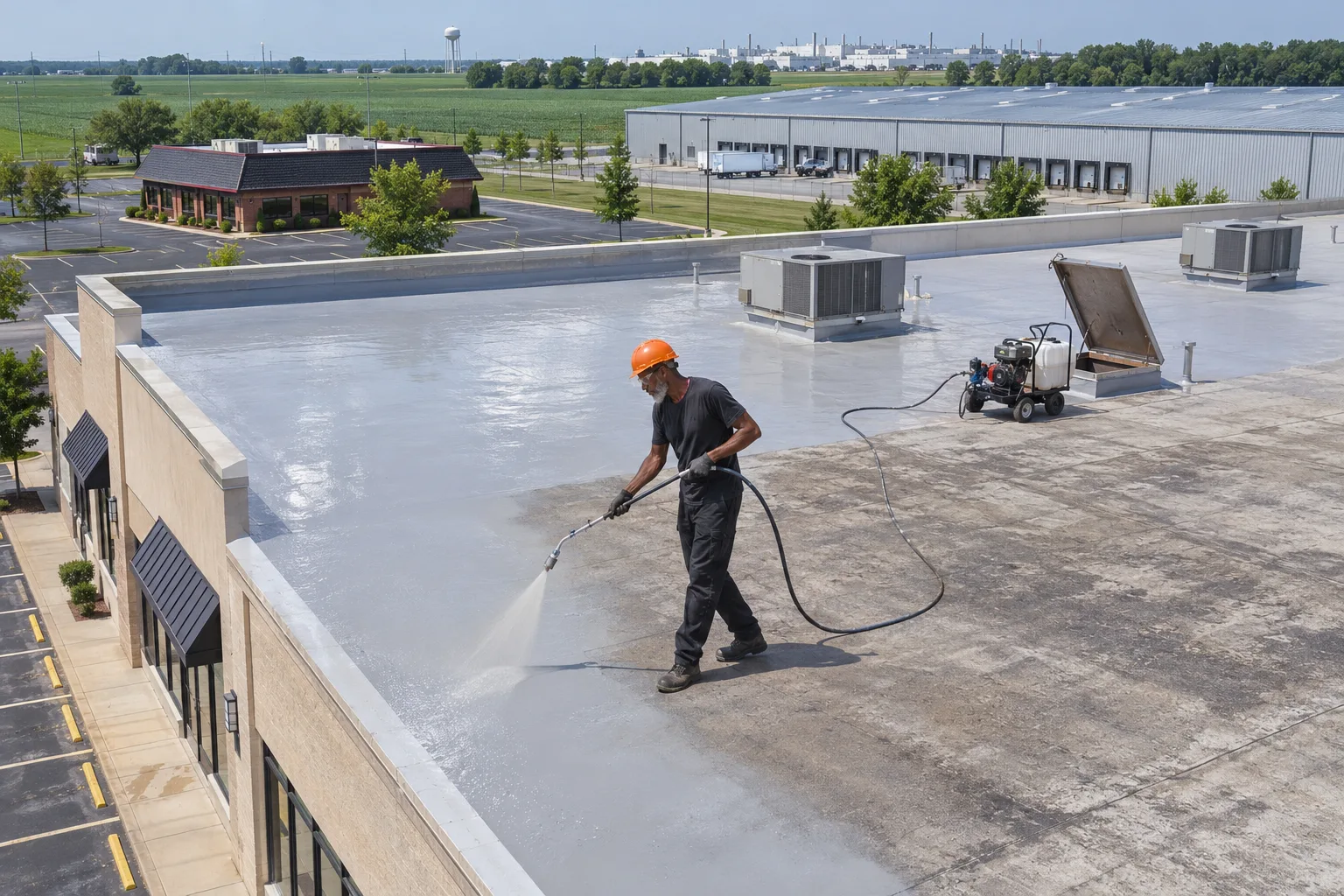
Thick, water-tolerant coating for low spots and flat sections.
Silicone Roof Coating details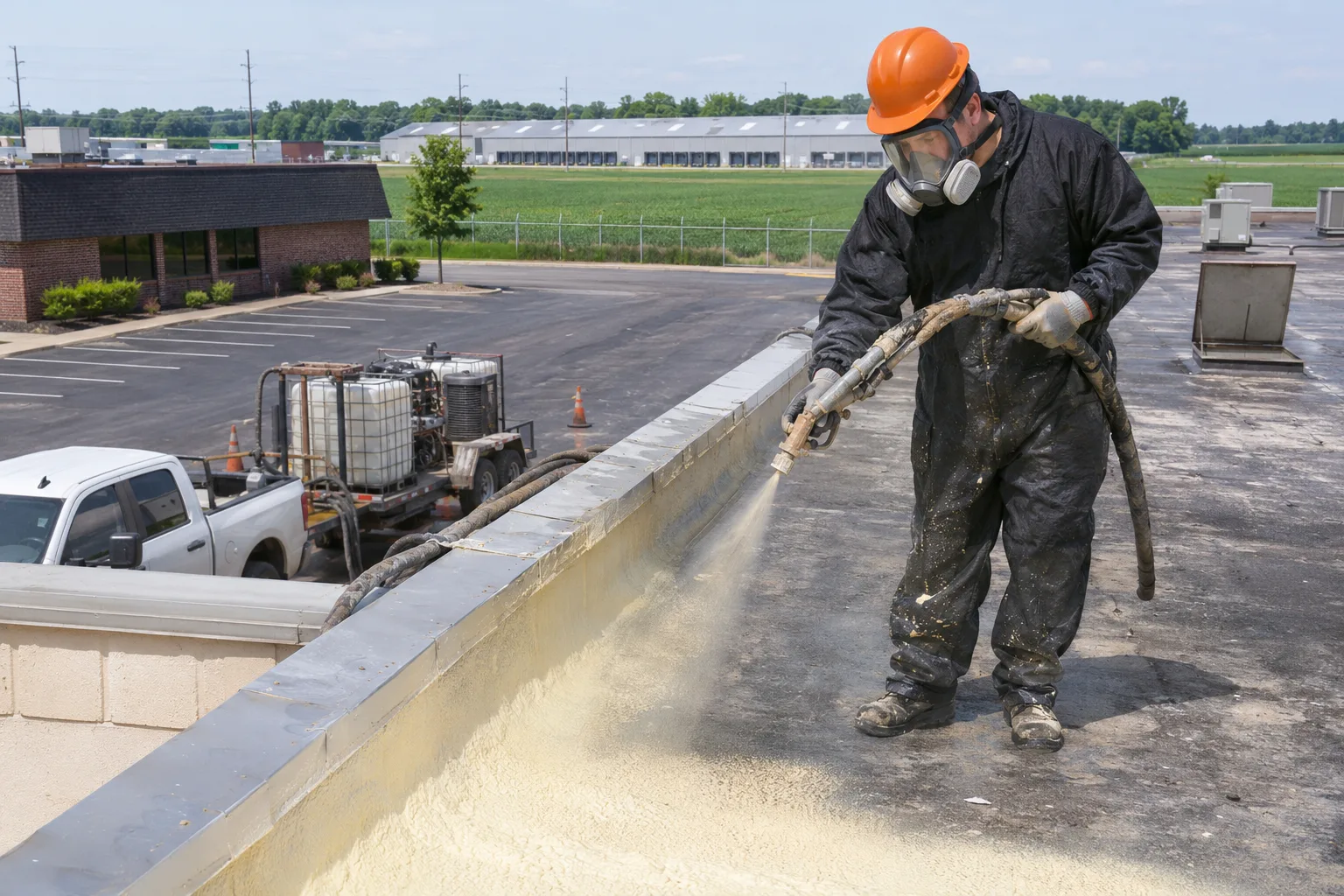
Sprayed foam plus topcoat for roofs that need insulation too.
Spray Foam Roofing details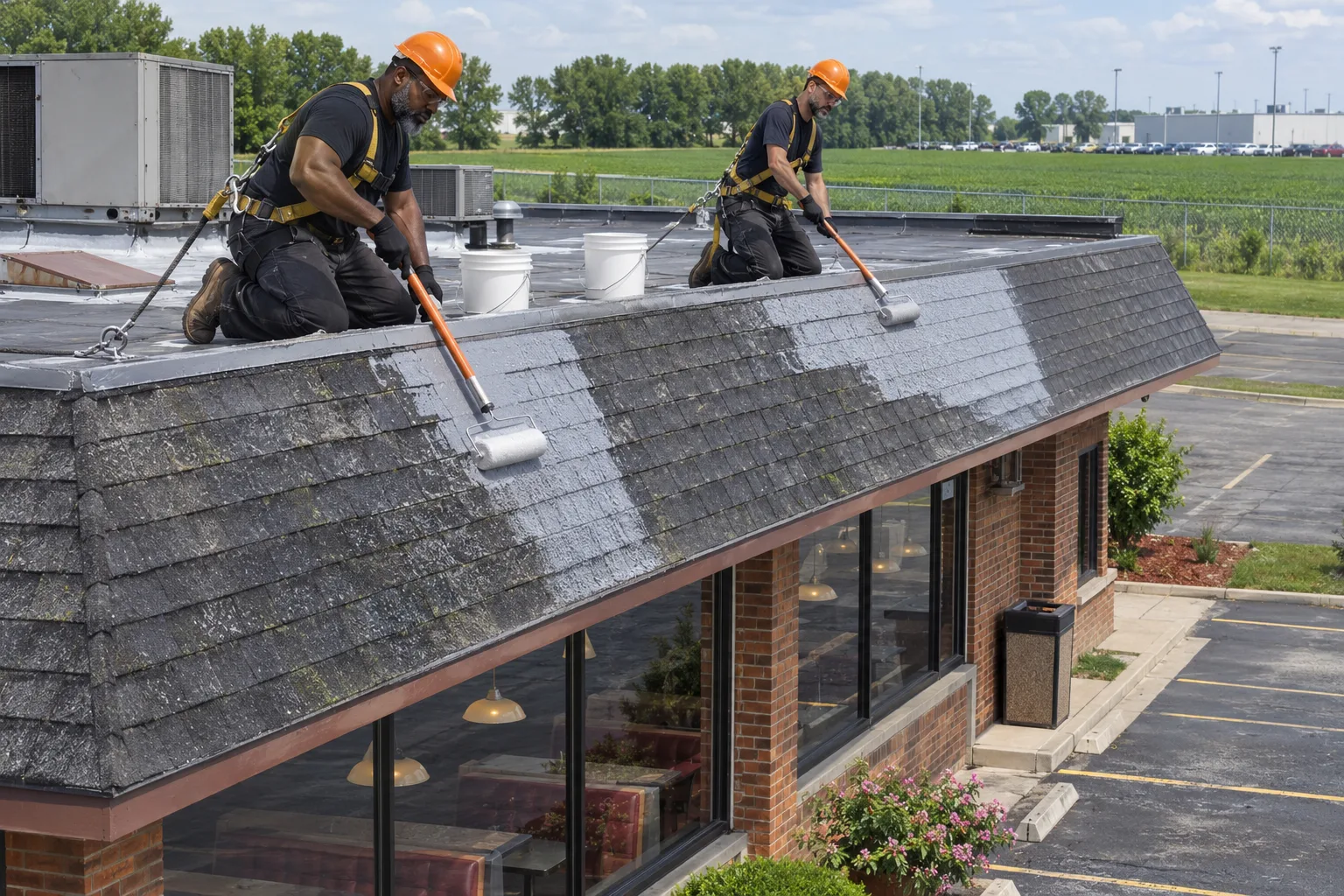
Coating for flat, attached shingles on smaller commercial buildings.
Shingle Roof Coating detailsWhat owners ask about acrylic before it goes on a Kokomo roof.
Standing water, short weather windows, and foot traffic. Acrylic softens where water ponds, so flat spots, clogged gutters, and valleys holding snowmelt need another system. It needs a stretch with no rain or frost while it cures, which narrows the season in north central Indiana, and busy paths wear it faster.
Yes, at the roof surface. White or light coatings reflect more sunlight than bare or rusted steel, so the panels stay cooler on hot days, and less heat moves into the space below. How much the inside changes turns on insulation and ventilation, and washing the roof now and then keeps it reflective.
Two, as a rule, often in contrasting colors so the second pass shows full coverage. The total dry film thickness in the spec matters more than the count. Each coat dries before the next goes on, so spring and fall weather shapes the schedule, and seams and screws get a reinforced detail coat first.
Plan around 10 to 15 years for many acrylic systems, set by film thickness, drainage, and panel prep. Roofs with good slope and clean gutters get the most from it, and spots holding water wear first. Freeze-thaw cycles, spring hail, and summer heat add wear; washing and a recoat extend it.
Yes, and sloped warehouse panels are a natural fit. Water runs off quickly, and acrylic flexes as the steel moves between summer and winter. Rusted areas get primer, screws and seams get detailed, and the acrylic goes over the primed panels. Gutter lines or low spots that pond get silicone in those sections.
Each winter, freeze-thaw cycles pry seams and screw holes a little wider. Water that gets in freezes, expands, and opens the gap further, so small leaks grow. A flexible coating that stays bonded to primed steel moves with the panels and keeps those openings closed, and a spring check of seams and screws catches lifted spots.
Tell us how the roof drains and how big it is. You get a ballpark range now and a scope once the panels are checked.