Main Benefit
The Roof Stays Closed Over Production
Nothing is torn off, so dust and debris stay out of machinery and product, and work on the floor continues through each phase of the job.
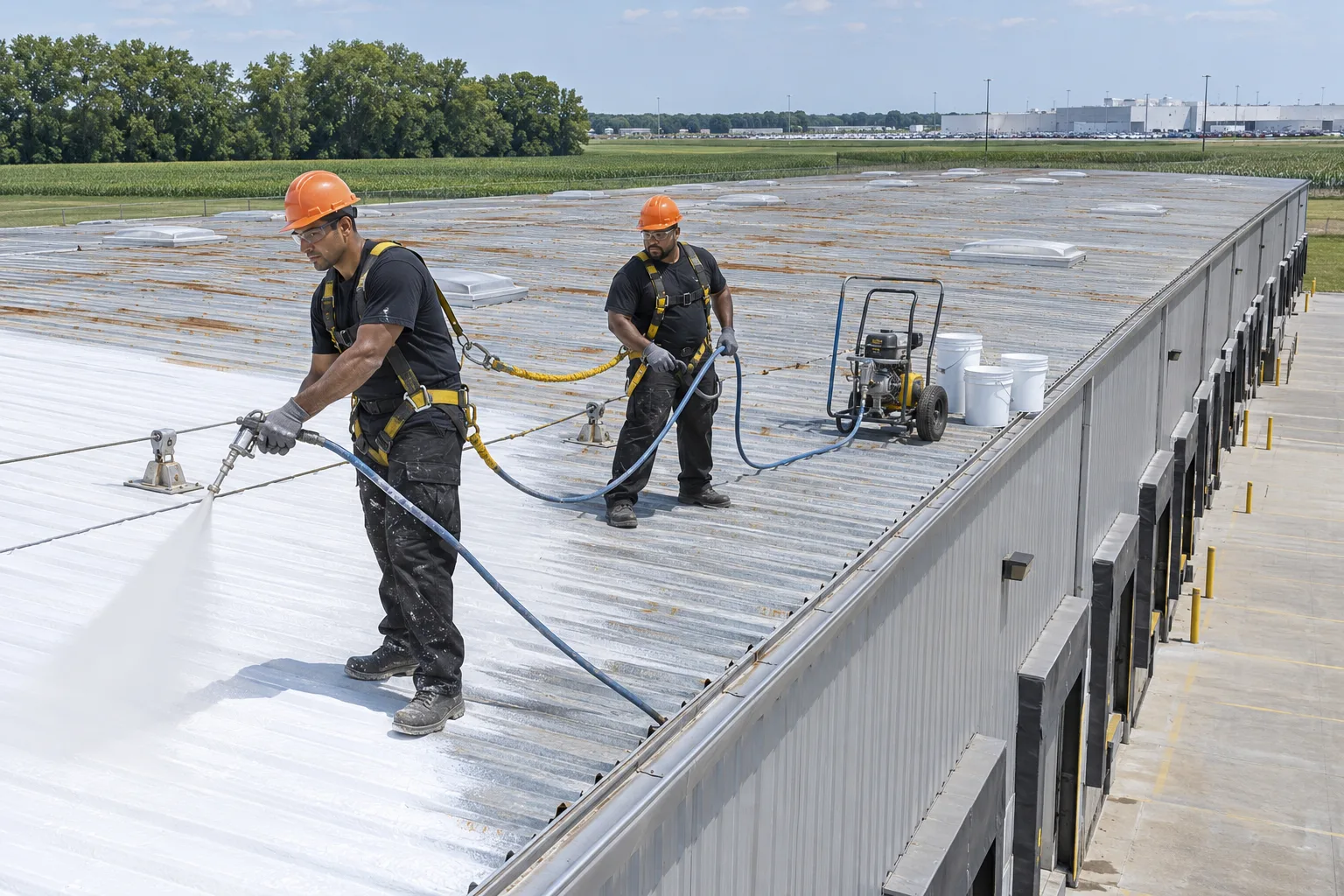
Marion metal roof coating for plant and warehouse roofs, done one section at a time so production and shipping keep moving underneath.
Marion metal roof coating on a plant roof happens while the building works. We split the roof into sections that match the floor plan below, so each area is wrapped up before the next one opens.
Shift changes, truck arrivals, and air intakes set the order. Crews stage lifts and pails away from docks and walkways, and the facility team knows which section is active each day.
Plant roofs carry heat, vibration, and process exhaust that most roofs never see. These are the conditions we find on them.
Warm, moist exhaust condenses on the panels around fans and stacks and rusts them from the top.
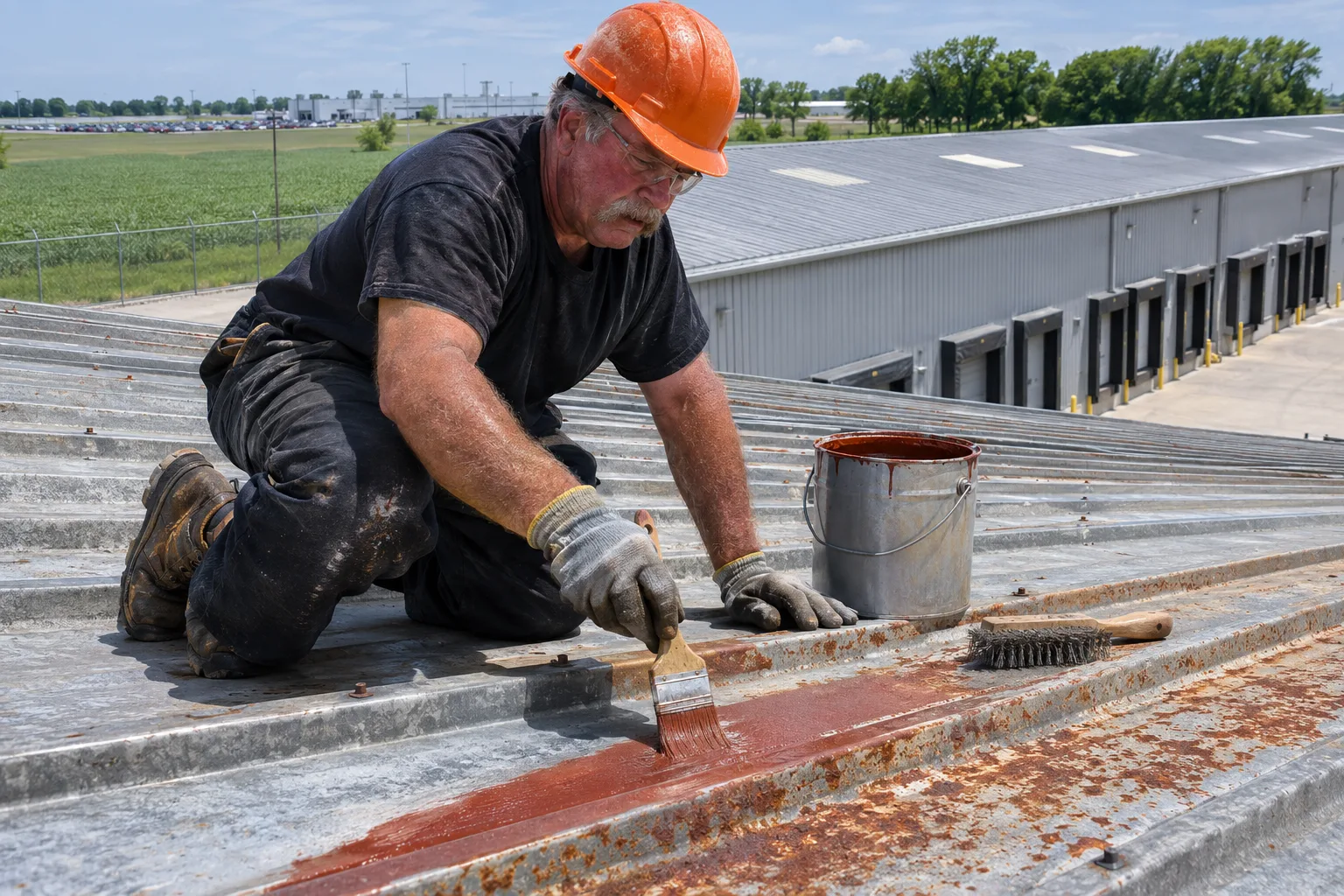
We grind and prime the rust ring, reset the fan curb flashing, and coat the area at full thickness.
Heavy equipment below shakes the frame, and screws back out faster than on a quiet building.
Oversized screws with new washers replace the loose ones before every head is detail-coated.
Abandoned or relocated rooftop units leave curbs and openings patched with sealant alone.
Unused curbs are closed with matching panel, and active ones get new flashing and a reinforced wrap.
Water tracks along purlins from a lap leak and drops far from where it entered.
The roof walk traces each drip upslope to its lap or screw row, and that detail gets fixed first.
Large units and their curbs block the slope, so water sits on the uphill side after rain.
Crickets of extra coating steer water around the curb, and the area gets full coating thickness.
For a plant that cannot shut down, coating seals the roof from the top without opening it over the floor.
Nothing is torn off, so dust and debris stay out of machinery and product, and work on the floor continues through each phase of the job.
Sealed screws and laps above assembly areas stop the drips that shut down a line.
Reflective topcoats cut solar heat gain above floors that already run warm.
Readings, product sheets, and photos go into the plant file for audits and future recoats.
Marion plant roofs often need more than one system. The table shows where each fits on a Marion building.
| System | Where It Fits | Check First |
|---|---|---|
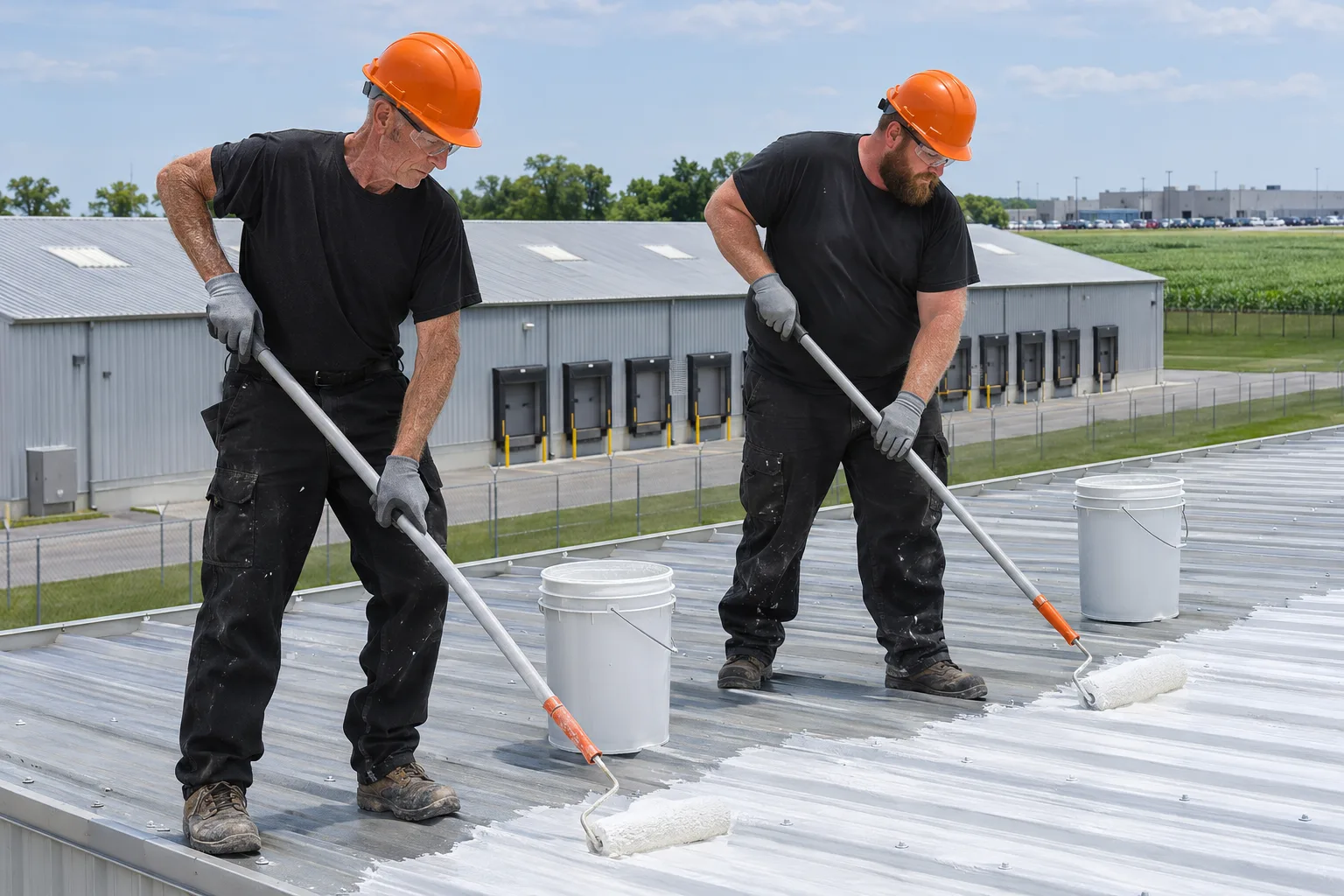
| Commercial Metal Roof Coating | Exposed-fastener and standing seam panel roofs | Screw grip, lap gaps, rust depth |
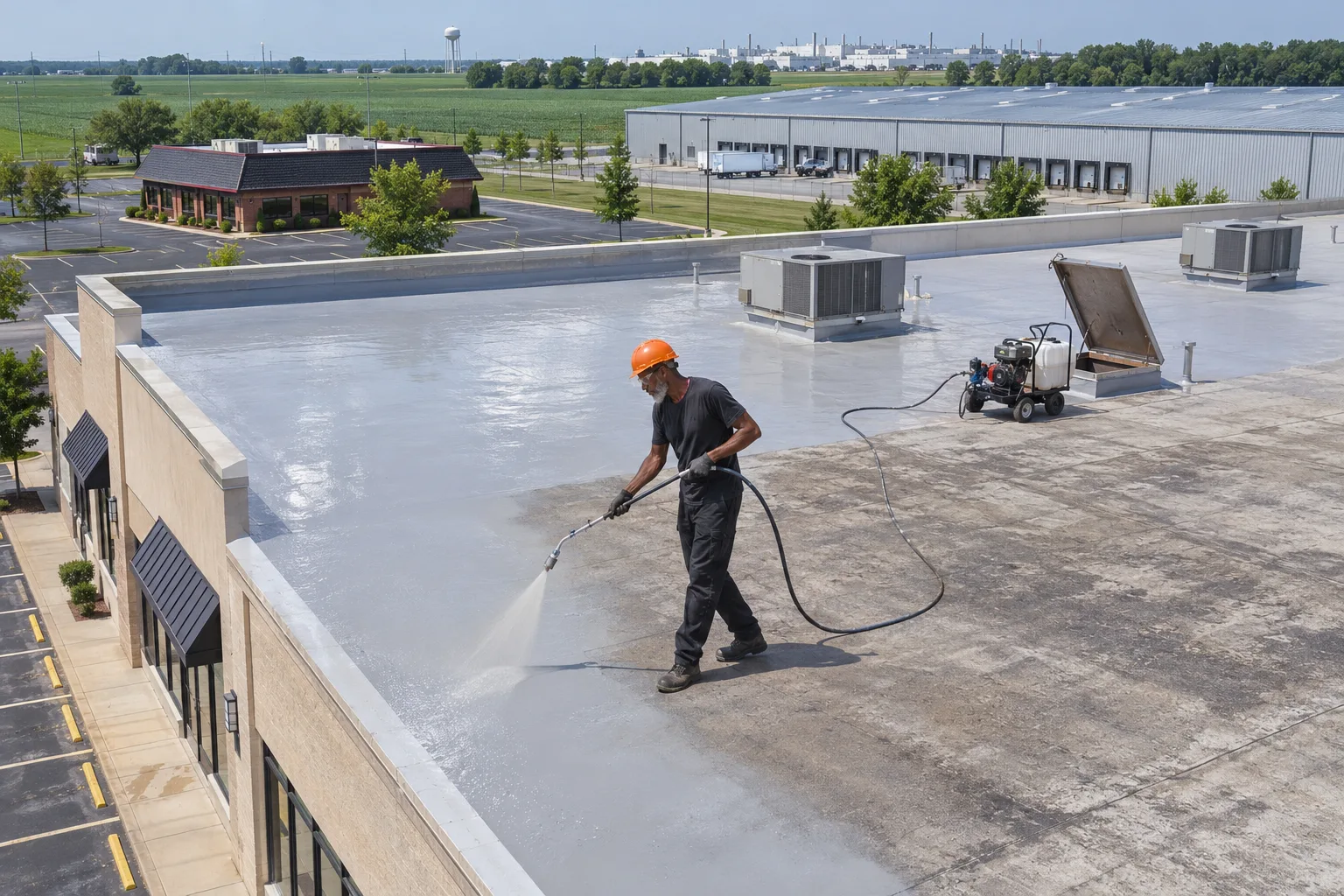
| Silicone Roof Coating | Low-slope and flat roofs that hold water | Ponding depth, old surface, wet insulation |
| Acrylic Roof Coating | Sloped panels that drain quickly | Drainage and the weather window |
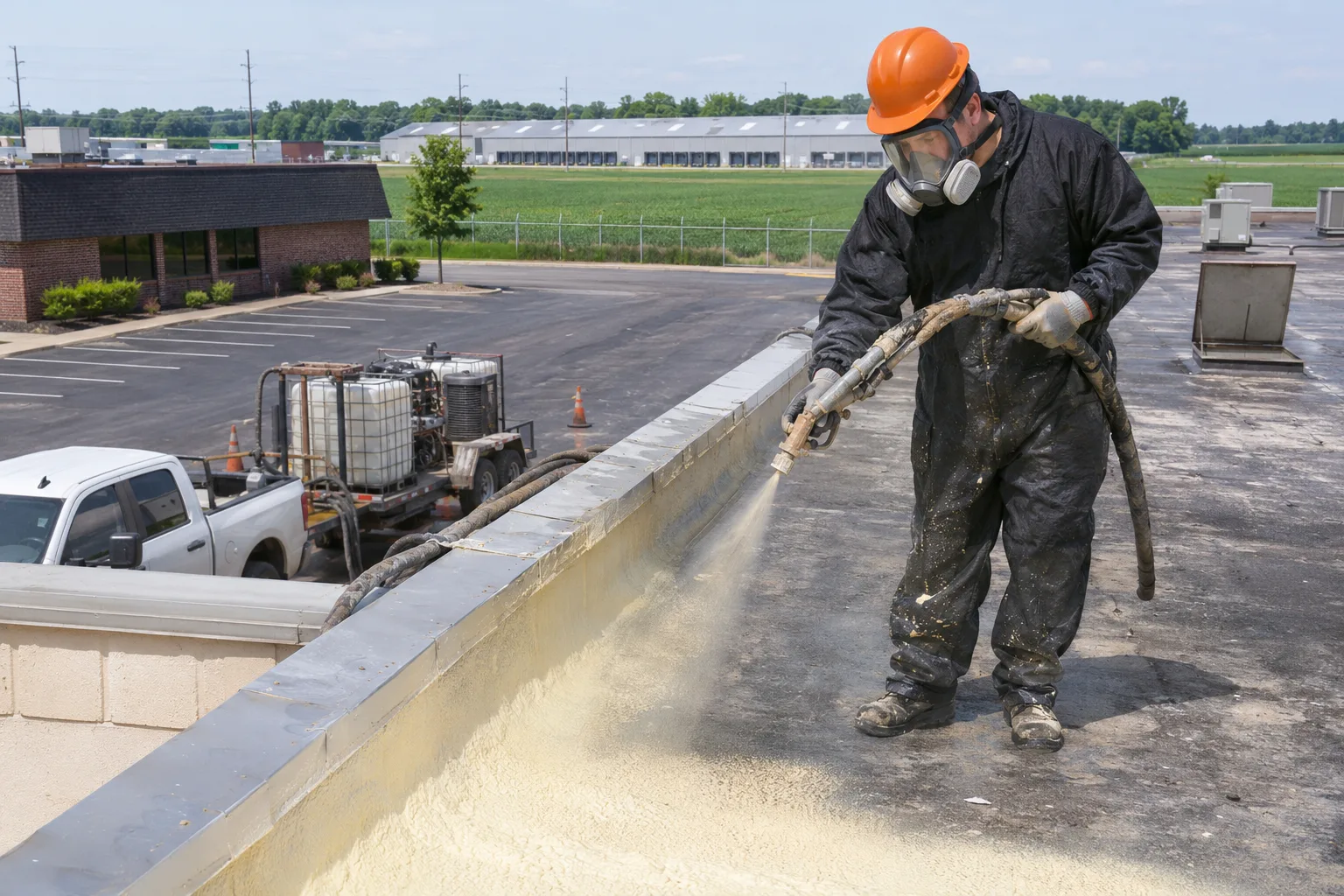
| Spray Foam Roofing | Dry, tight roofs that also need insulation | Dry substrate, wind, overspray risk |
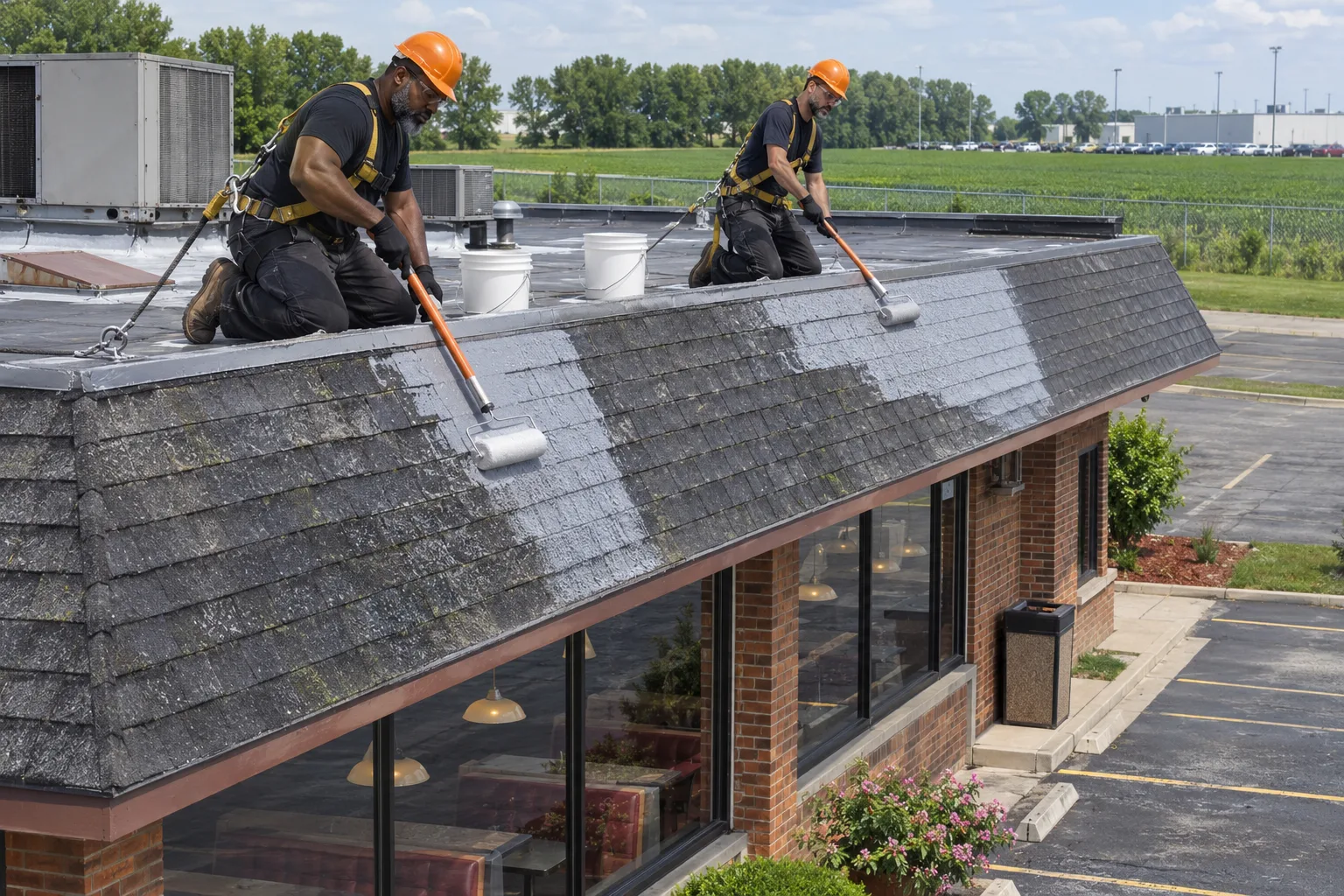
| Shingle Roof Coating | Asphalt shingles still flat and attached | Curling, granule loss, deck firmness |
Call with the roof area and where water lands inside. We trace it and tell you which repairs come before coating.
The same five steps as every job, arranged around the plant schedule.
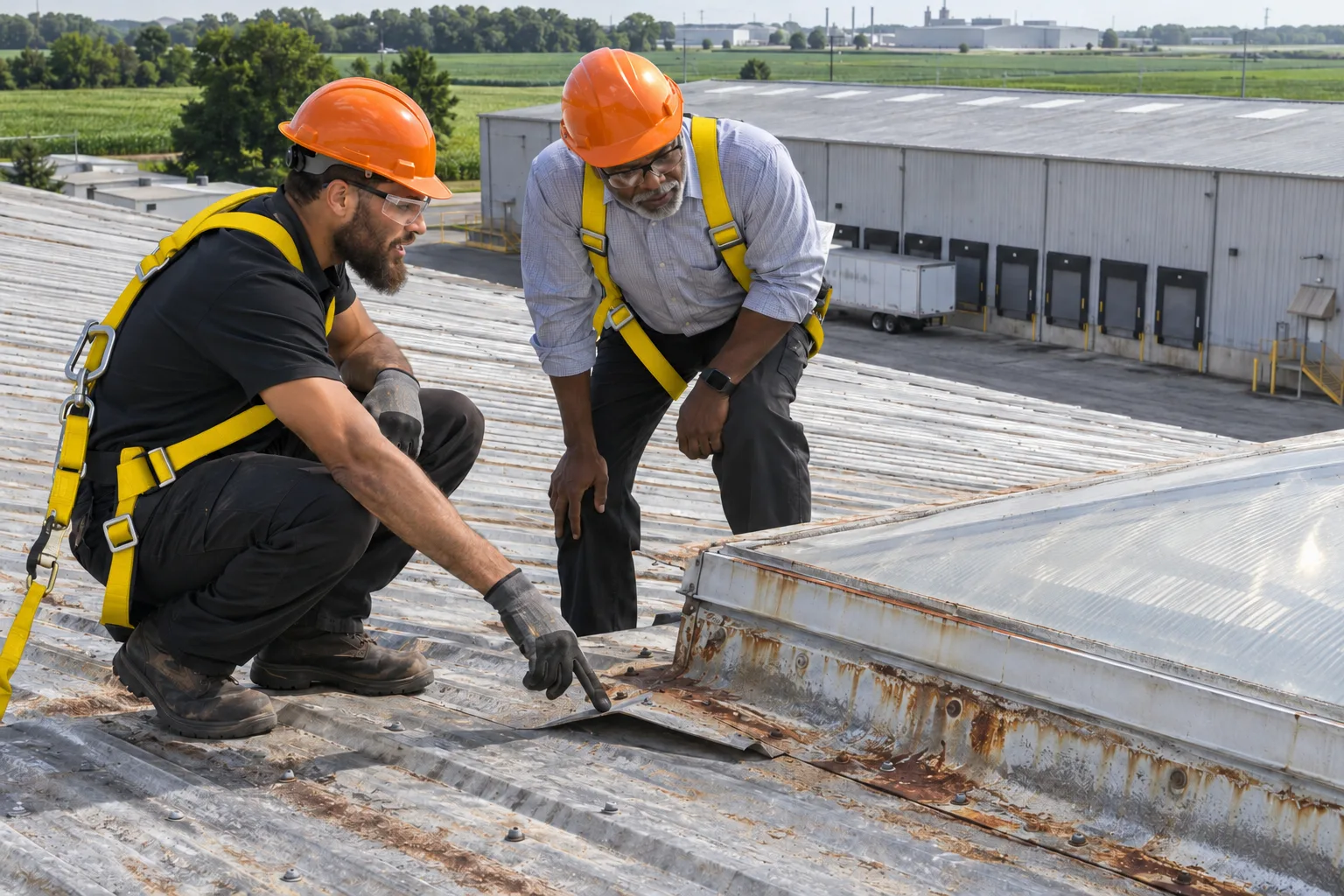
We walk the roof with the facility manager, mark every leak path, and map the sections against the floor plan below.
Sections are ordered around shifts, intakes, and truck traffic, and each one gets planned start and finish dates.
Screws, laps, curbs, and rust are fixed in the active section only, so open work never spreads across the roof.
Detail coats and the field coat go on, then wet-mil readings confirm thickness before the crew moves over.
Readings and photos for that section go to the facility team as each phase wraps up.
We coat commercial metal roofs in the towns below as well as Marion. For a building elsewhere, call us or send us a message.
What Marion plant and warehouse owners ask before a coating job.
Yes, from big plant roofs to older exposed-fastener steel buildings. Each roof gets checked for rust, screw condition, open seams, and drainage before a system is picked. We schedule around shifts and shipping so the building keeps running, and permit questions go to the local building department before work starts.
Plants, warehouses, machine shops, and the office buildings beside them. Most Marion jobs are exposed-fastener panel roofs that take a metal roof coating system, with silicone on low sections that hold water and spray foam where the building also needs insulation.
Our ballpark is about $2.50 to $4 per square foot for coating, compared with about $5 to $8 for replacement. On a plant roof, the number of screws and laps needing work, curbs around equipment, process residue to wash off, and the phasing plan decide where in that range it lands.
If it is a commercial building in Marion, yes. Give us the address and roof size by phone or through the estimate form, and we line up a roof walk. Buildings between Marion and Kokomo are covered too.
Often, yes. Phasing plans regularly put the noisiest prep, like pressure washing and screw replacement, on weekends or slow shifts, with coating during the week. The plan is set with the facility team before work begins.
A walk each spring and after big storms, with a close look at screws, laps, and the areas around exhaust fans. Small nicks get touched up early, drains stay clear, and the topcoat is renewed when readings show it has worn thin.
Crews stay on the roof side and work by section, with no openings cut over the floor. Intakes near the active section are shut or filtered on coating days, and the plan with the facility team covers which areas to keep clear below lifts.
Tell us the roof size and how the plant runs. You get a ballpark now and a phased scope after the roof walk.