Main Benefit
Standing Water Without Breakdown
Silicone keeps its film under ponding that would soften other coatings, so the low spots stop being the first place a roof fails.

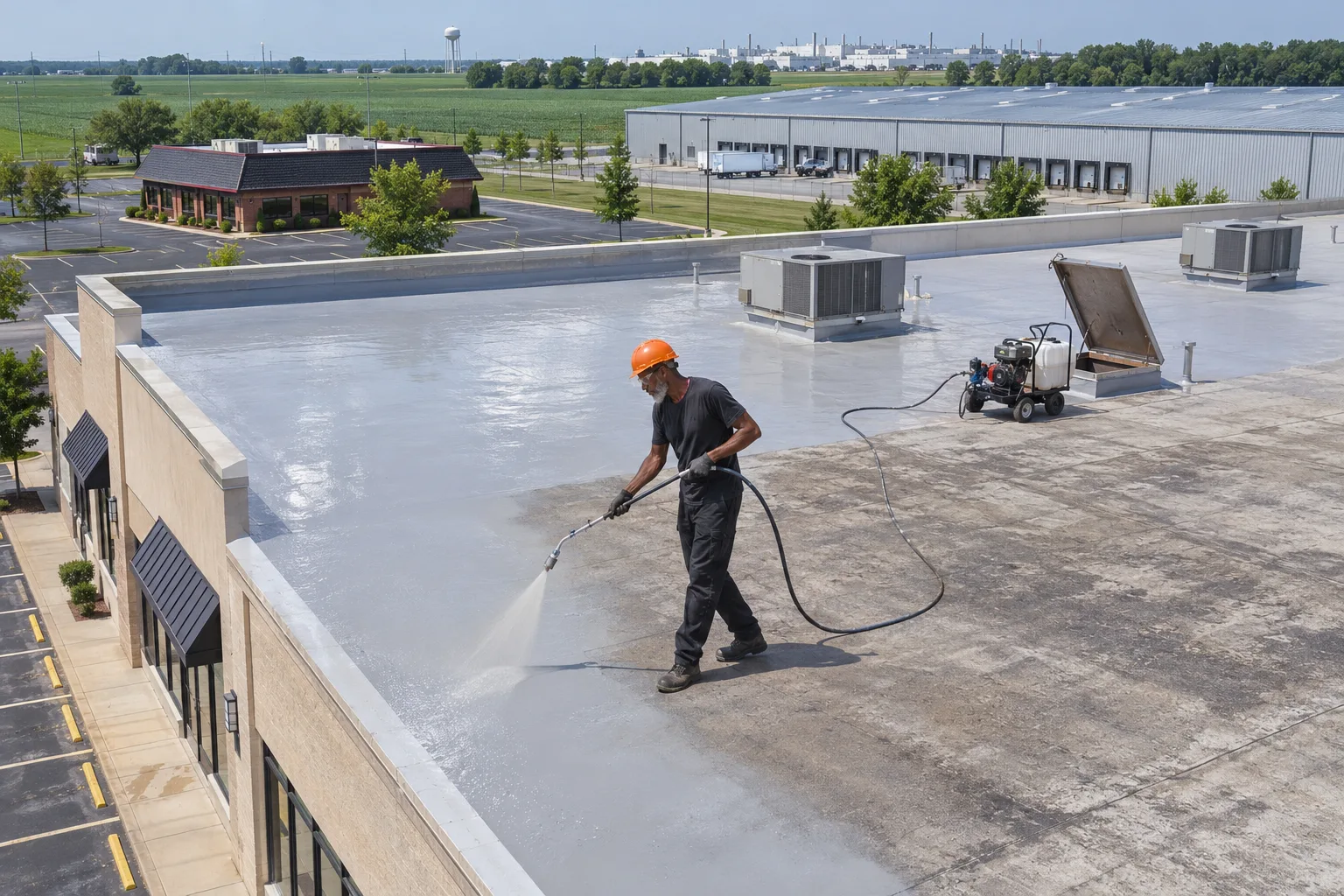
Kokomo silicone roof coating goes on low-slope metal and flat roofs where water stands, sealing seams and eaves in thick, ponding-tolerant layers.
Kokomo silicone roof coating belongs where water lingers. These checks show whether a roof can take silicone now or needs work first.
| Factor | Ready For Silicone | Fix First |
|---|---|---|
| Slope | Low-slope metal or flat sections | Steep slopes that shed water fast |
| Standing Water | Ponds that dry within a few days | Deep ponds over a sagging deck |
| Surface | Clean metal, old acrylic, or old silicone | Peeling coating that lifts with tape |
| Insulation | Dry boards under the roof | Wet boards found by core cuts |
| Foot Traffic | Light, along marked paths | Daily traffic across the whole roof |
Silicone earns its place on the parts of a roof that stay wet. These are the conditions that send an owner looking for it.
Low spots near drains and between purlins hold water after every rain until it evaporates.
We clear the drains first, then build extra silicone thickness across the ponding areas.
Snow piles at the eave and melts against laps that were built to shed running water.
Eave laps and gutter edges get a reinforced silicone detail ahead of the field coat.
Water collects in corners where a flat section meets a parapet wall or a higher roof.
Wall flashing is sealed, and silicone is carried up the wall to cover the joint.
Condensate lines and uneven curbs leave water standing around the HVAC equipment.
Condensate is routed to a drain, and curb bases get silicone at full thickness.
Silicone is the wet-roof choice among the five systems we install in Kokomo. Compare where each one fits below.
| System | Where It Fits | Check First |
|---|---|---|
| Commercial Metal Roof Coating | Exposed-fastener and standing seam panel roofs | Screw grip, lap gaps, rust depth |
| Silicone Roof Coating | Low-slope and flat roofs that hold water | Ponding depth, old surface, wet insulation |
| Acrylic Roof Coating | Sloped panels that drain quickly | Drainage and the weather window |
| Spray Foam Roofing | Dry, tight roofs that also need insulation | Dry substrate, wind, overspray risk |
| Shingle Roof Coating | Asphalt shingles still flat and attached | Curling, granule loss, deck firmness |
Silicone pays off where water sits, which on Kokomo roofs means eaves, drains, and low spots after a thaw.
Silicone keeps its film under ponding that would soften other coatings, so the low spots stop being the first place a roof fails.
High-solids silicone builds its thickness in one or two passes, which shortens time on the roof.
White silicone bounces summer sun off the roof and keeps the panels from cooking in July.
Once worn, the roof gets cleaned and recoated with more silicone instead of a tear-off.
Tell us where it collects and how long it stays. We check whether silicone fits that section or the drains need work first.
Silicone needs a clean, dry surface and a measured film. Each job runs through these five steps.
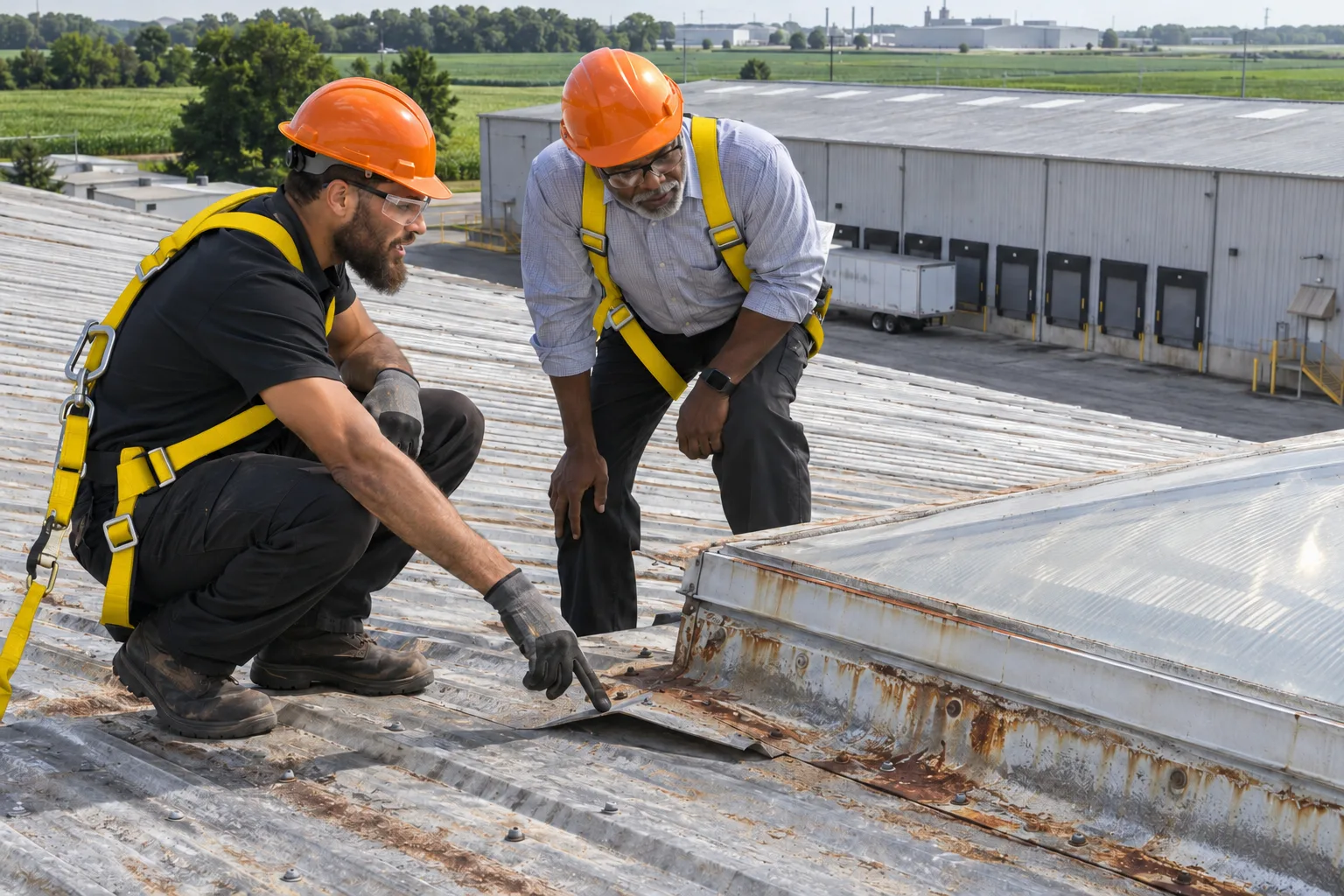
We map every low spot, test the old surface with an adhesion pull, and core suspect areas to find wet insulation.
Debris comes out of drains, scuppers, and gutters so water can leave the roof once the coating is down.
Pressure washing cleans the panels; rusted steel gets primer, and bleed-blocking primer goes over old asphalt surfaces.
Seams, fasteners, and penetrations get a brushed silicone detail coat, with fabric at the laps that move.
The field coat goes on in one or two passes, and wet-mil readings confirm the thickness the scope calls for.
Silicone often covers only the wet sections. These systems handle the rest of the roof.
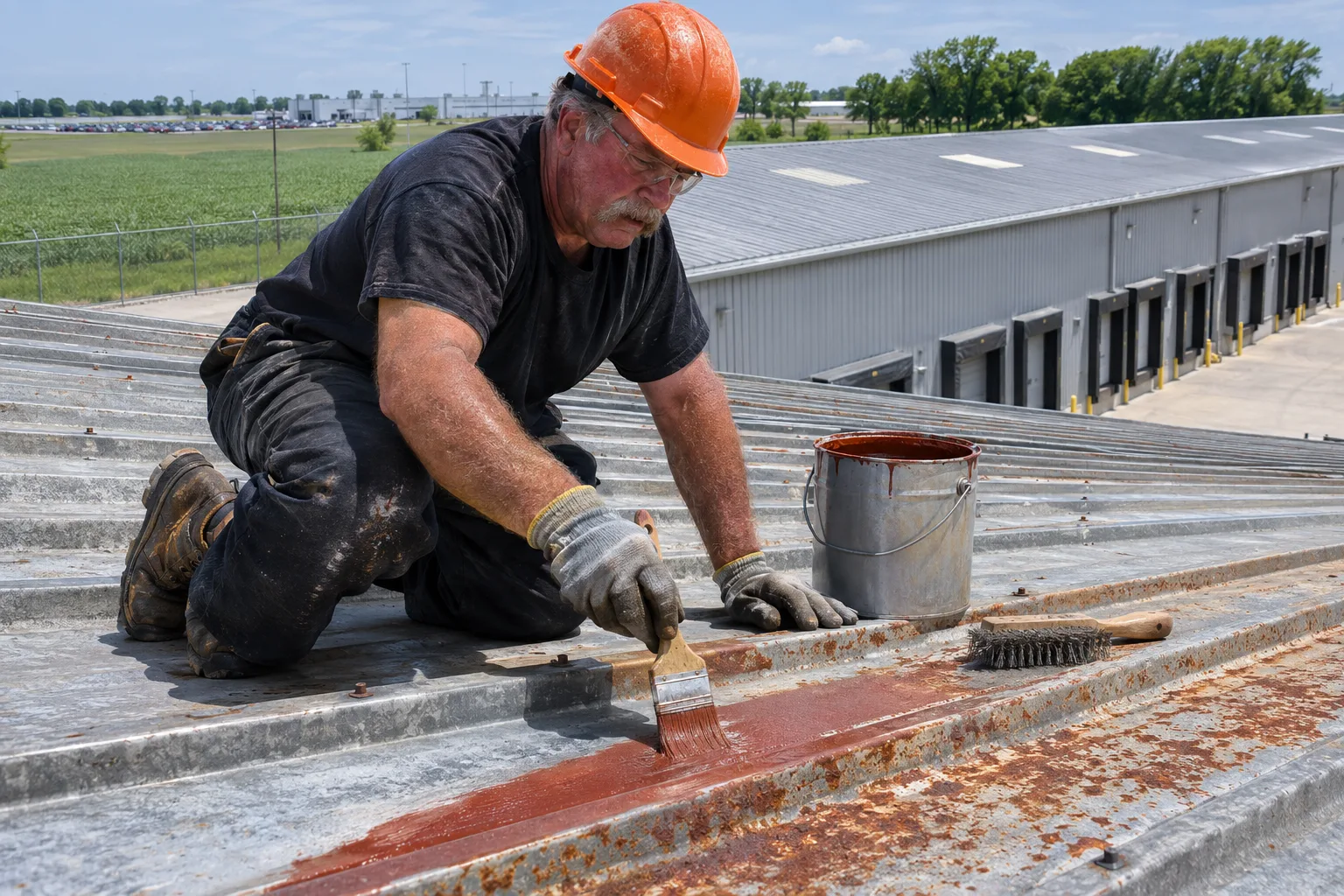
Screws, laps, and rust repaired, then the whole panel roof coated.
Commercial Metal Roof Coating details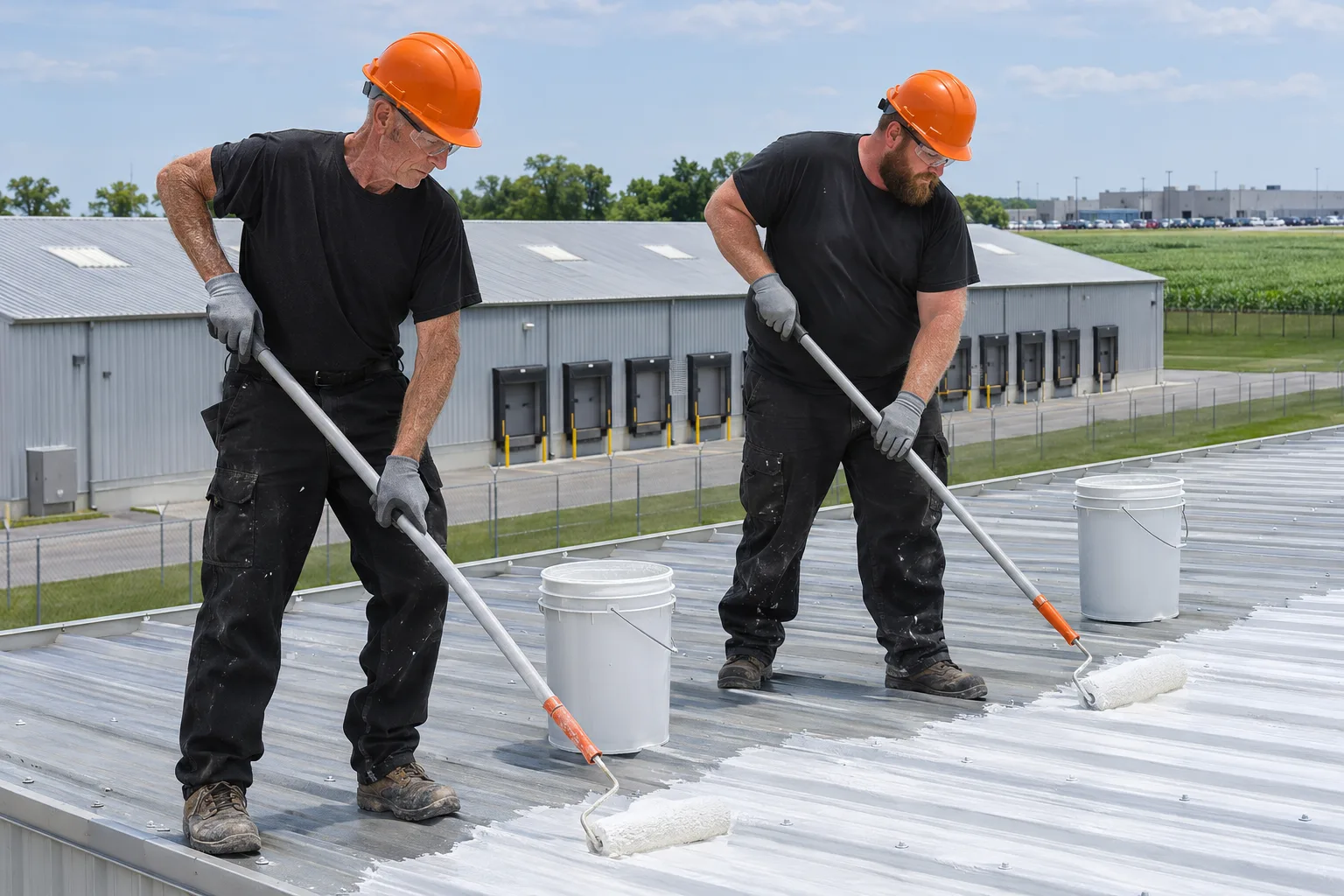
Two reflective coats for sloped panels that drain fast.
Acrylic Roof Coating details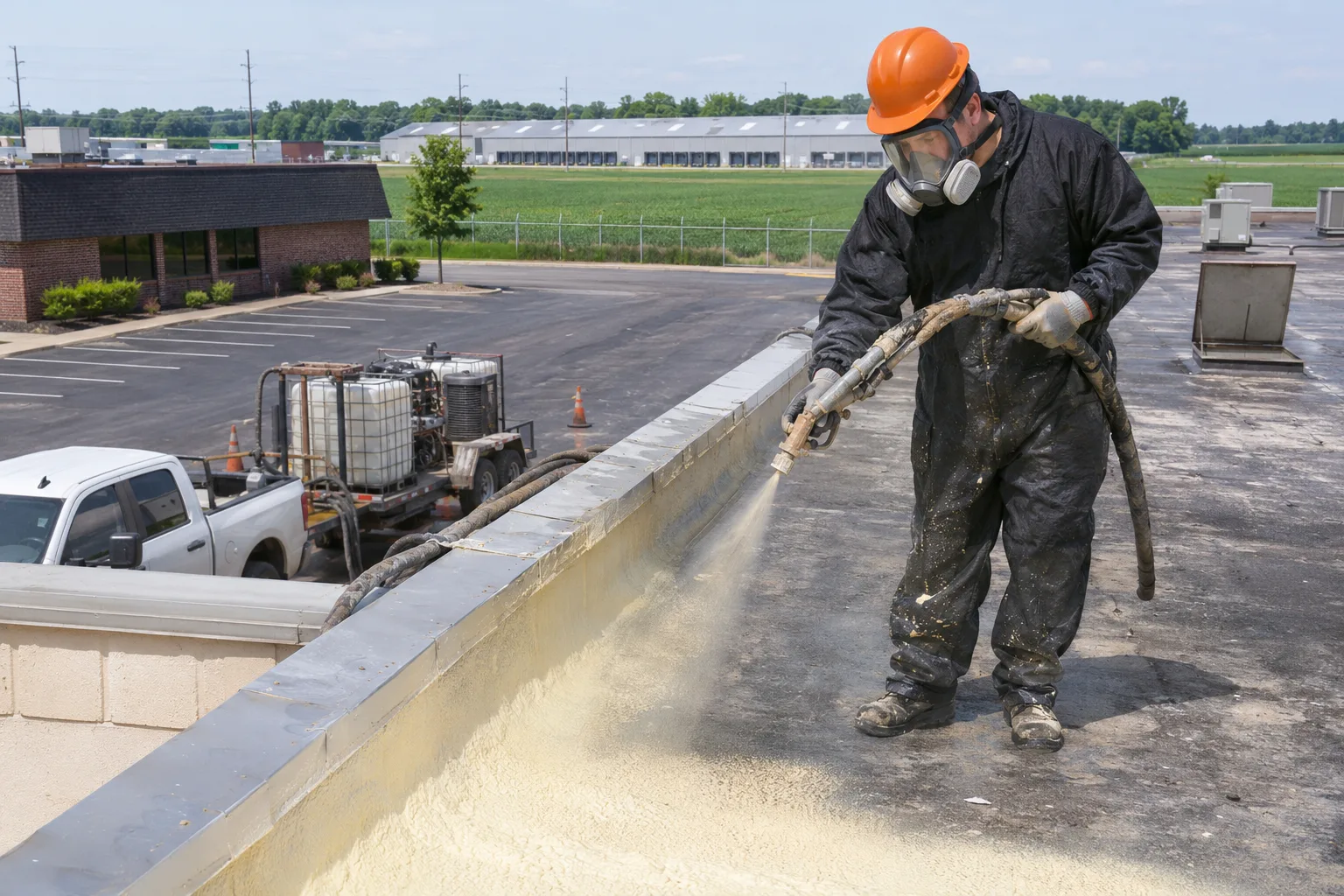
Sprayed foam plus topcoat for roofs that need insulation too.
Spray Foam Roofing details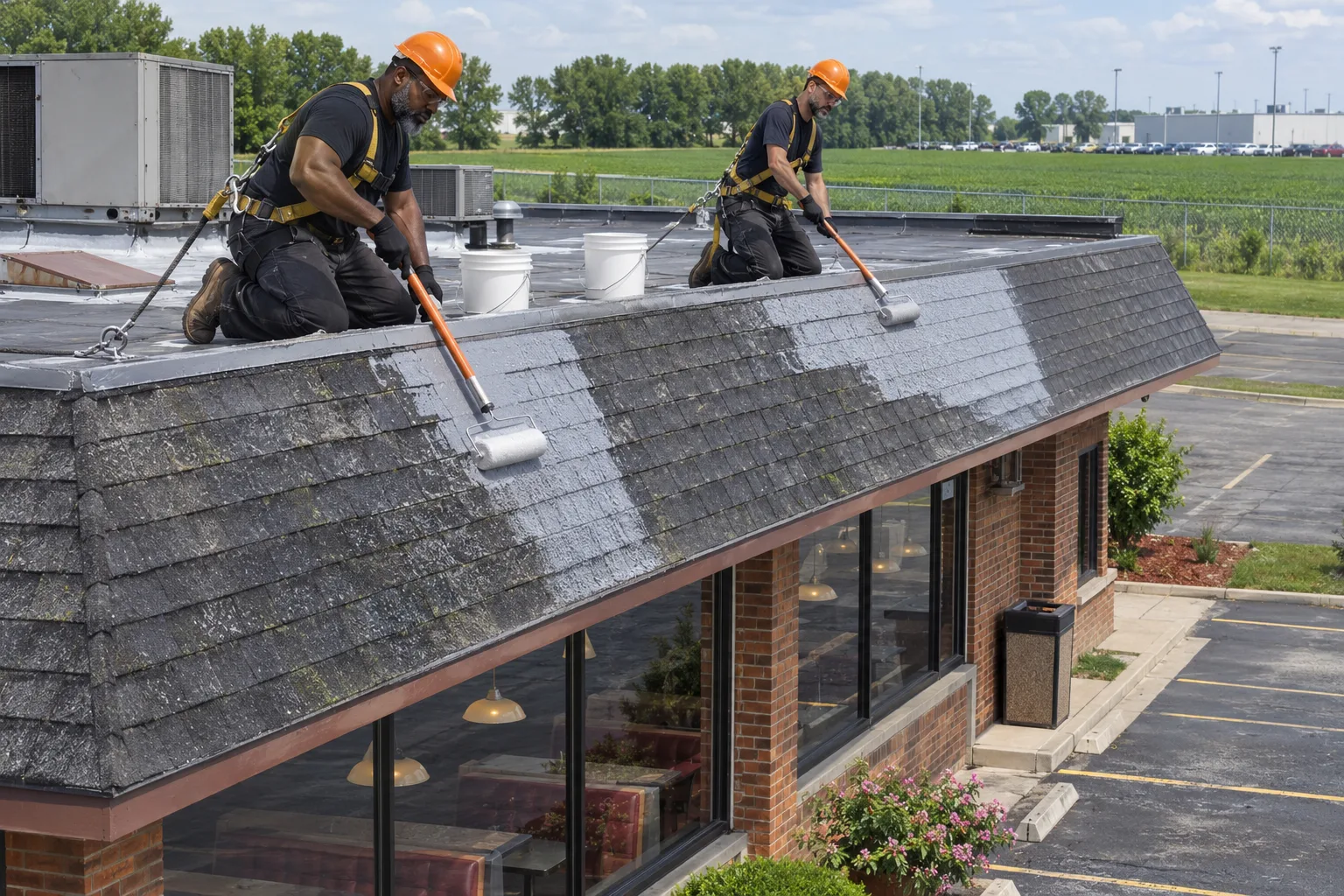
Coating for flat, attached shingles on smaller commercial buildings.
Shingle Roof Coating detailsWhat owners ask before choosing silicone for a wet section of roof.
Dirt pickup, slick footing, and limited recoat options are the main ones. Silicone holds dust, which dulls its reflectivity, and wet or frosted silicone is slippery in a Kokomo winter. Later recoats almost always have to be silicone, and heavy foot traffic tears it faster, so walkway pads go along service paths.
Pick silicone for sections where water sits after rain or snowmelt, since standing water leaves it intact. Pick acrylic for roofs that drain well when a reflective, lower-cost coating that recoats easily is the goal. Many buildings use both, and an adhesion test on the prepared panels settles which bonds best.
One or two passes in most cases, sized by the dry film thickness in the spec rather than a set count. Seams, fasteners, and penetrations get a detail coat first. Weathered, rough panels take more material to reach the same film, and wet-mil checks during spraying catch thin spots before the silicone cures.
Expect 10 to 20 years from many silicone systems, with applied thickness as the biggest factor. Surface prep, how much ponding the roof holds, foot traffic near equipment, and dust from nearby plant work all shorten or stretch that. At the end, the roof can be cleaned and recoated with silicone instead of torn off.
Meltwater backs up behind ice at gutters, eaves, and drains and sits against laps and screws made to shed running water. From there it moves sideways under the laps and through loose fasteners. Clear drains, new fasteners, and silicone at the eave lines and laps, where water stands, cut those winter leaks down.
Point us to the wet spots and give us the roof size. We check whether silicone fits and send a scope after the roof walk.