Main Benefit
Coating Exposed-Fastener Metal Roofs Without Tear-Off
Thousands of screw heads and every lap get sealed in place, so the steel stays on the building and the space below stays dry and working.
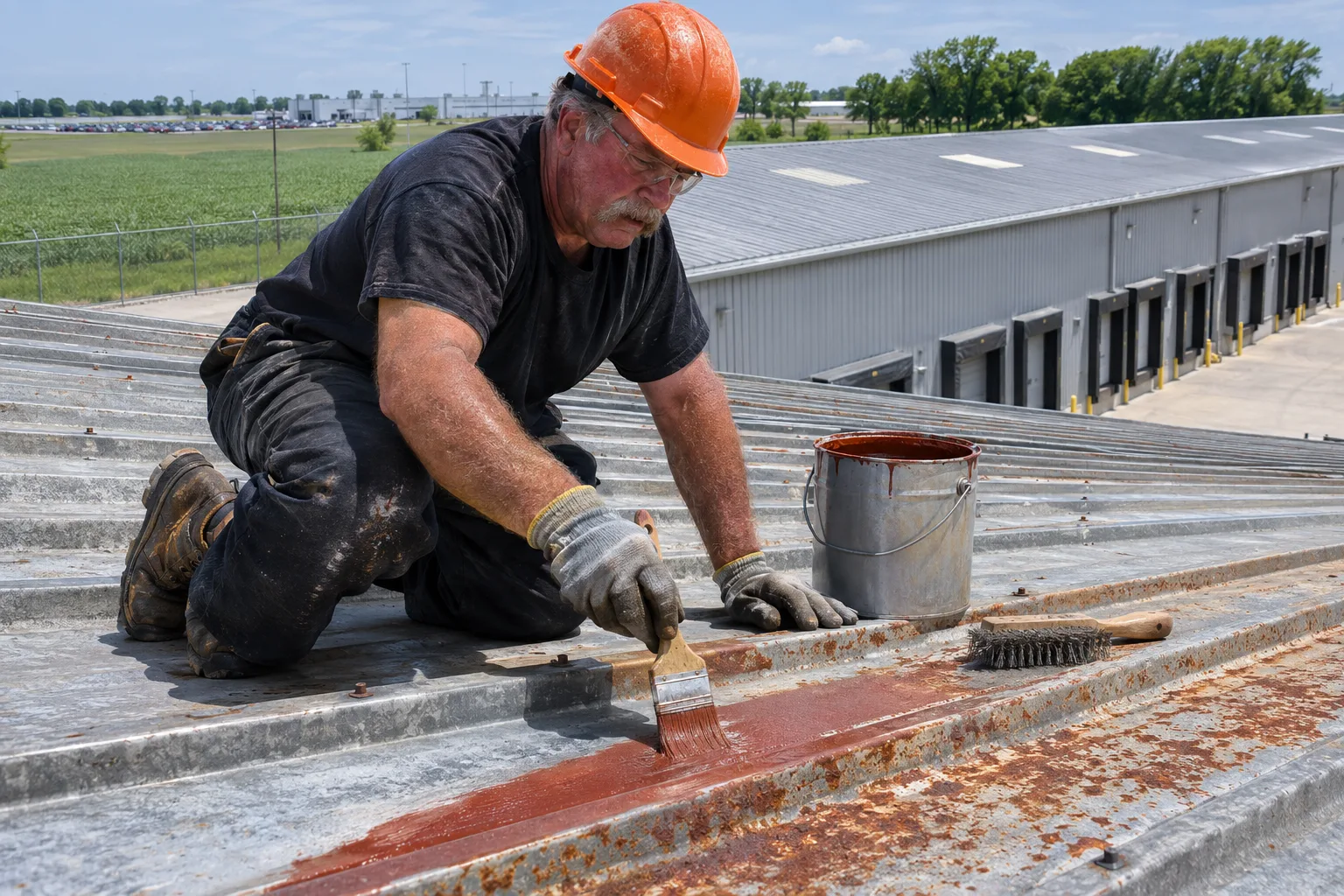
Our Kokomo commercial metal roof coating work starts at the fasteners and laps, then covers the whole panel roof in a measured coating system.
Kokomo commercial metal roof coating fits panel roofs that still hold a screw. Use these checks to see whether your roof is ready now or needs repairs first.
| Factor | Ready To Coat | Fix First |
|---|---|---|
| Screws | Some loose or backed out | Holes wallowed too wide for oversized screws |
| Panels | Surface rust on solid steel | Rust holes or soft spots underfoot |
| Laps | Open or rust-stained laps | Laps split by a bent or lifted panel |
| Insulation | Dry under the panels | Wet batts or board found by cores |
| Skylights And Curbs | Dried sealant, intact frames | Cracked skylight panels or rotted curbs |
These five conditions turn up on most exposed-fastener roofs we walk around Kokomo, from auto suppliers to farm shops.
Steel panels grow and shrink with each hot day and cold night, which works screws loose over the years.
Loose screws come out, oversized replacements go in with new sealing washers, and each head gets a detail coat.
Snowmelt and rain sit longest at the eave and the end laps, so corrosion starts there.
We grind the scale, prime bare steel, and bridge the laps with fabric set in coating.
Fiberglass skylight panels sit in sealant beads that crack after years of sun.
Frames get new sealant and a reinforced wrap, and cracked skylight panels are replaced before coating.
Rubber boots split and their clamps loosen as the panel moves under them.
Split boots are replaced, and each penetration gets a fabric-reinforced collar of coating.
Leaves, grit, and ice slow the drainage until water backs up under the panel edge.
Gutters are cleared and their seams sealed, and valley laps get extra coating thickness.
Commercial metal roof coating is one of five systems we put on Kokomo roofs. The table shows where each one fits and what gets checked first.
| System | Where It Fits | Check First |
|---|---|---|
| Commercial Metal Roof Coating | Exposed-fastener and standing seam panel roofs | Screw grip, lap gaps, rust depth |
| Silicone Roof Coating | Low-slope and flat roofs that hold water | Ponding depth, old surface, wet insulation |
| Acrylic Roof Coating | Sloped panels that drain quickly | Drainage and the weather window |
| Spray Foam Roofing | Dry, tight roofs that also need insulation | Dry substrate, wind, overspray risk |
| Shingle Roof Coating | Asphalt shingles still flat and attached | Curling, granule loss, deck firmness |
On a panel roof, the coating pays off at the screws, laps, and curbs, which is where the leaks were.
Thousands of screw heads and every lap get sealed in place, so the steel stays on the building and the space below stays dry and working.
Primer locks down surface rust before it eats through, which keeps panels in service longer.
Reflective topcoats cut how hot dark, faded steel gets on summer afternoons.
Thickness readings and product data go to the owner for insurance files and future recoats.
Send a photo of the worst section. We can tell you whether the panels are ready for coating or need repairs first.
Five steps, in this order, on every exposed-fastener or standing seam roof we coat.
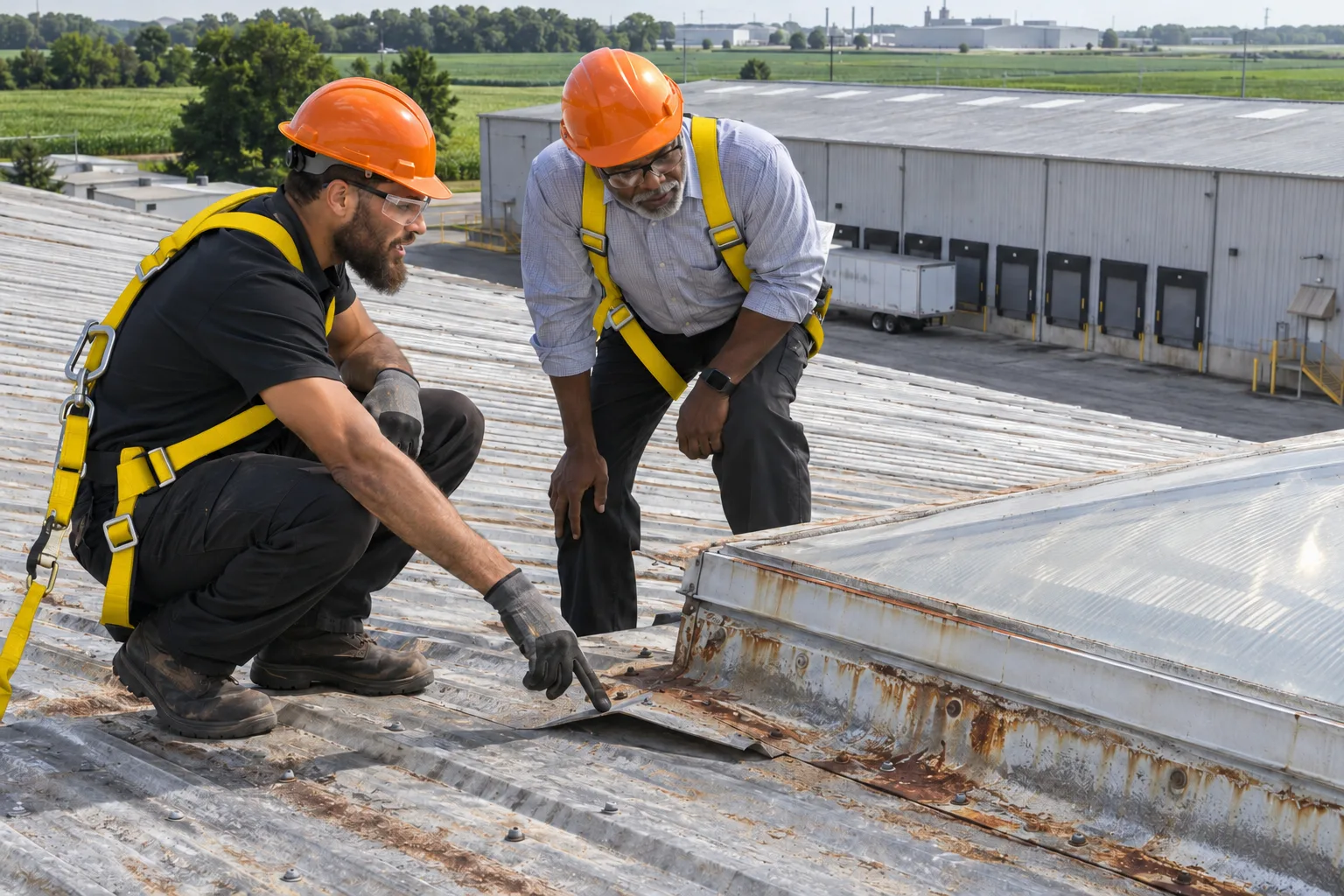
Each panel run, lap, curb, and gutter is walked and photographed, and a few screws are pulled to check thread grip in the purlins.
A pressure wash takes chalked paint, dirt, and loose rust off the steel so primer can grip clean metal.
Heavy scale is ground down, and rust-inhibiting primer goes on every rusted or bare spot before any coating touches it.
Oversized screws replace stripped ones, every head gets a brushed detail coat, and laps get fabric set in coating.
The field coat is sprayed to the scope thickness, checked with a wet-mil gauge, and touched up wherever it reads thin.
Some panel roofs need a second system on part of the roof. These are the ones that pair with it most.
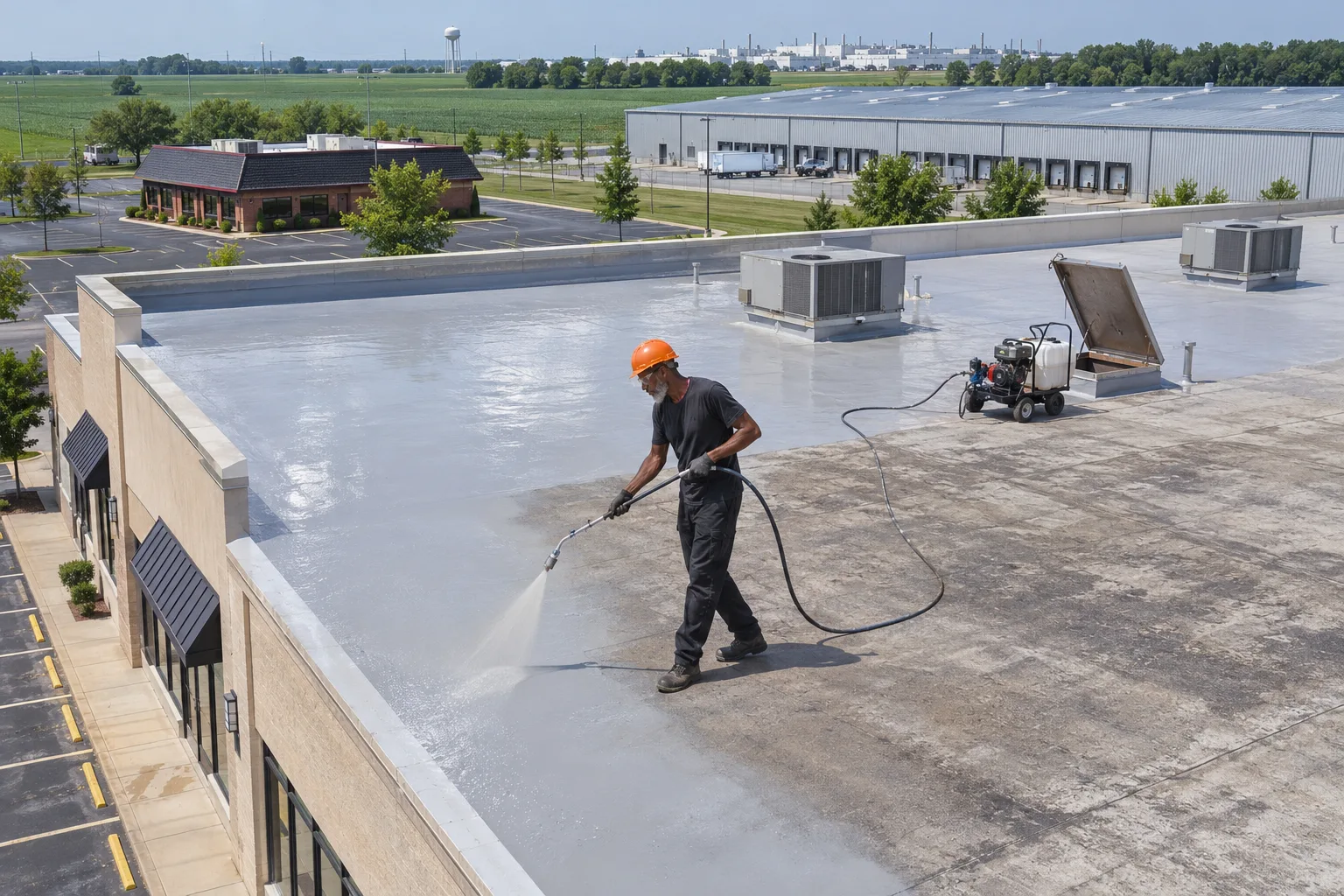
Thick, water-tolerant coating for low spots and flat sections.
Silicone Roof Coating details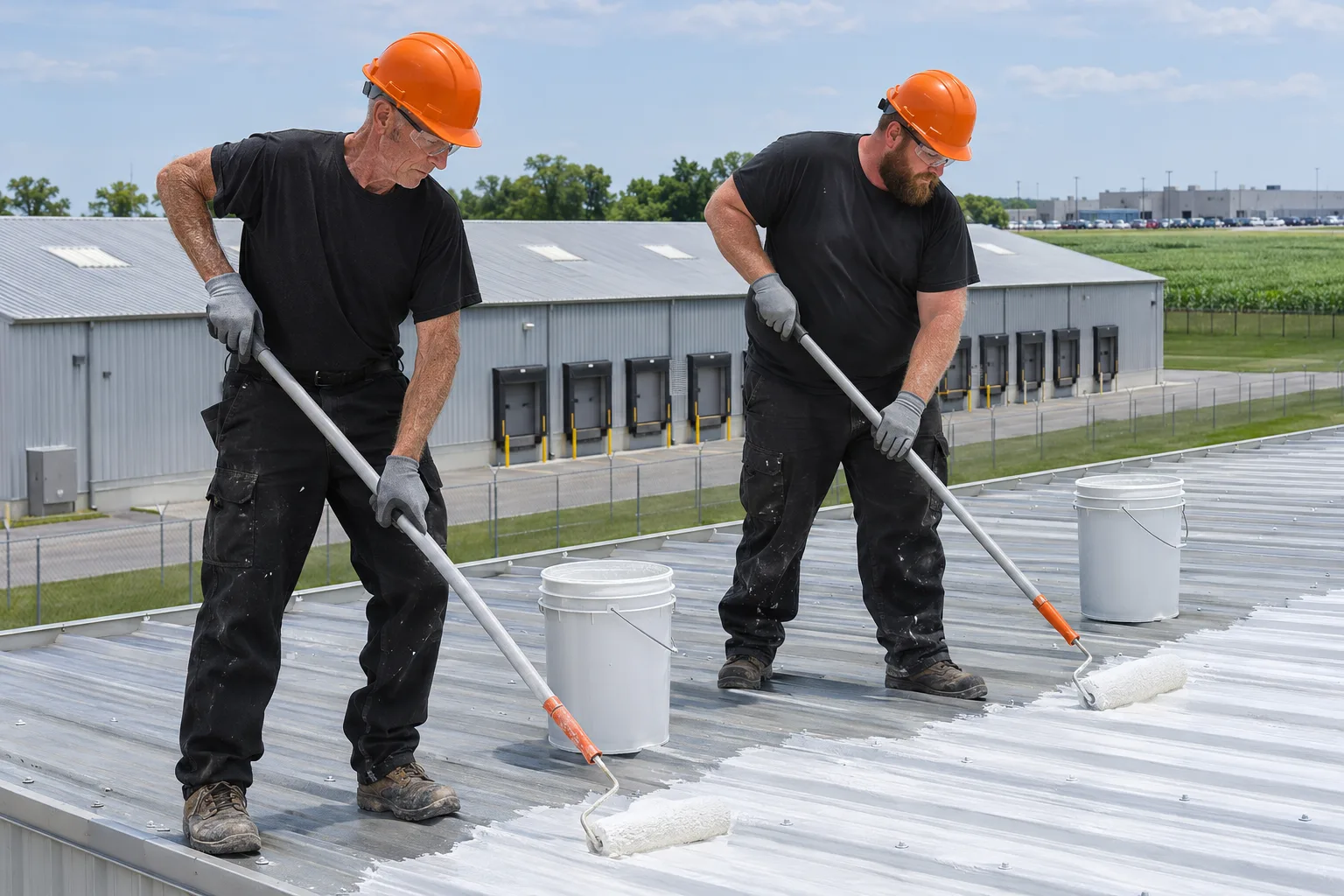
Two reflective coats for sloped panels that drain fast.
Acrylic Roof Coating details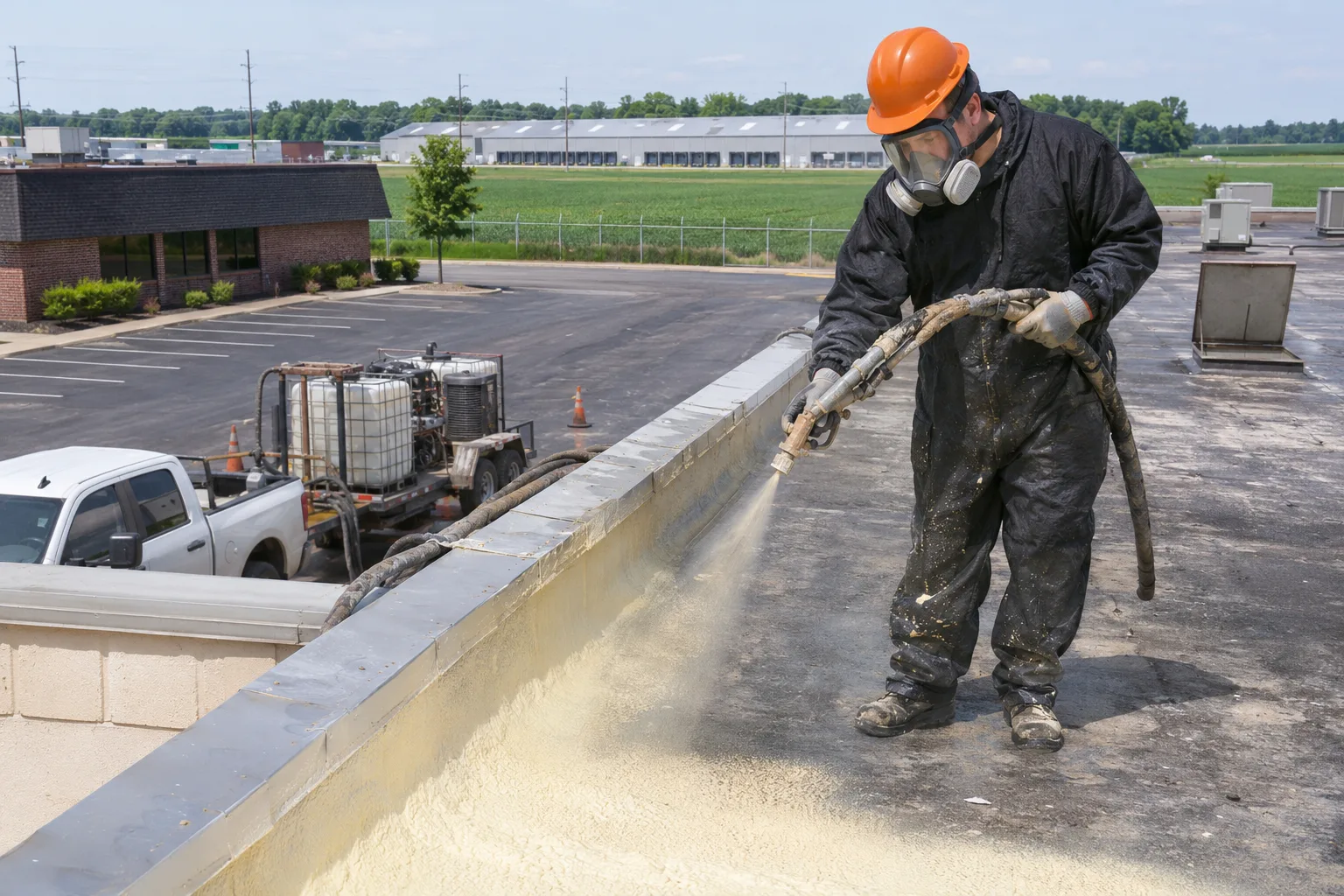
Sprayed foam plus topcoat for roofs that need insulation too.
Spray Foam Roofing details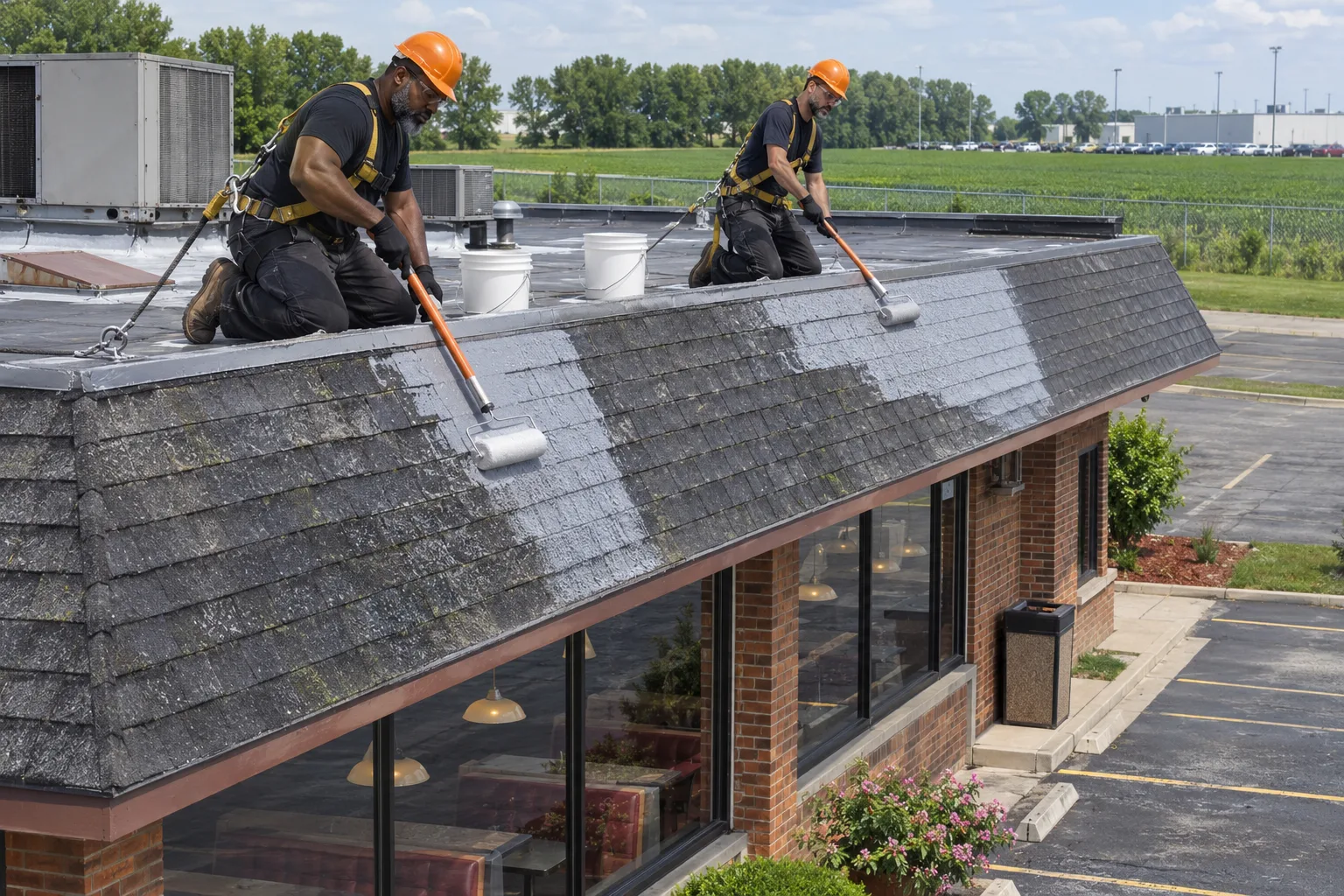
Coating for flat, attached shingles on smaller commercial buildings.
Shingle Roof Coating detailsAnswers on prep, systems, cost, and code for panel roofs around Kokomo.
Screw by screw, before any field coat. Each fastener is checked; stripped or backed-out ones are swapped for oversized screws, and every head gets a brushed detail coat. Side laps and end laps get reinforcing fabric or tape. That detail work comes first because fasteners and laps, rather than the panel field, are where these roofs leak.
It starts with a pressure wash and wire brushing to strip loose scale and chalked paint. Heavy rust gets ground, and rust-inhibiting primer goes on every bare or rusted area so the topcoat bonds and corrosion stops spreading underneath. Thinned or holed panels are cut out and replaced, since primer over a hole only hides it.
That depends on the building, so the roof walk picks it. Silicone handles sections where water sits after rain or snowmelt. Acrylic suits sloped roofs that drain well and keeps a bright, reflective surface. Slope, ponding, rust level, foot traffic, and budget decide the choice, after an adhesion test on your own panels.
Our ballpark runs about $2.50 to $4.00 per square foot for coating and about $5 to $8 for full replacement, with the final number set after an on-site inspection. Roof size, rust level, how many screws and laps need detail work, the coating and its thickness, rooftop equipment, and lift access move a roof within that range.
Restoring a mill roof means washing off process dust and residue, replacing failed screws and damaged panels, sealing seams and penetrations, priming rust, and applying a coating at a specified thickness. Exhaust stacks and heat sources get careful flashing, and the coating is picked to handle the temperatures and residue around them.
Commercial buildings in Indiana fall under the Indiana Building Code, 675 IAC 13, adopted by the Fire Prevention and Building Safety Commission. The state lists the 2014 edition, based on the 2012 International Building Code, as currently in effect. The local building department enforces it and confirms what applies to your project.
Send the roof size and a few photos. You get a ballpark range now and a written repair-and-coat scope after we walk the panels.