Main Benefit
One Layer Over Every Leak Point
Sprayed foam bonds to the panels and covers screws, laps, and seams with no joints of its own, which removes most of the places a metal roof leaks.

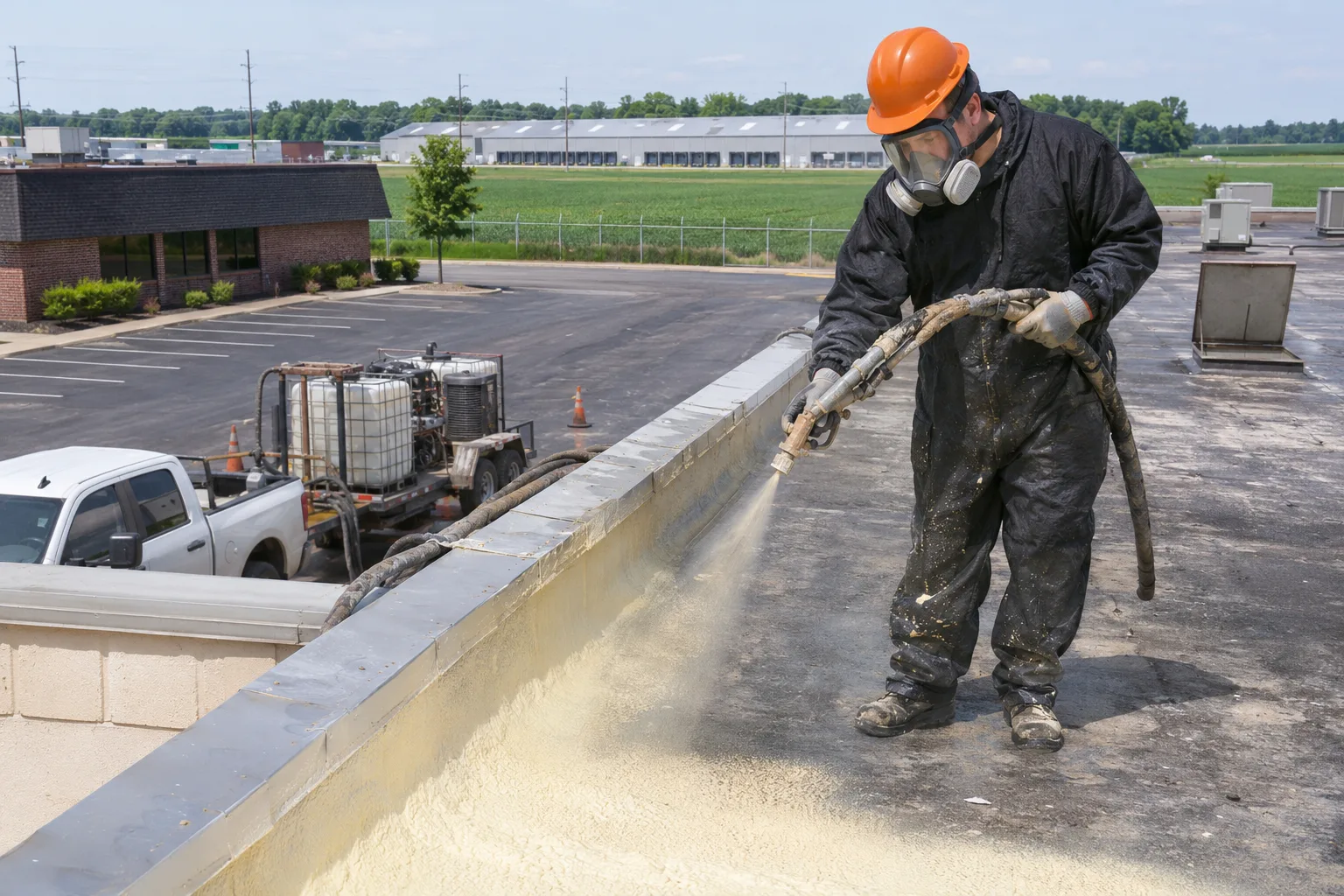
Kokomo spray foam roofing covers dry metal and flat roofs in one continuous foam layer, adds insulation, and finishes with a protective topcoat.
Kokomo spray foam roofing needs a dry, tight roof underneath. These checks show whether foam can go on now.
| Factor | Ready For Foam | Fix First |
|---|---|---|
| Substrate | Dry metal, built-up, or single-ply | Wet insulation or a soft deck |
| Panels | Fastened tight to the purlins | Loose or rusted-through panels |
| Drainage | Foam can taper toward drains | Drains clogged or missing |
| Surroundings | Room to mask cars and intakes | Busy lot tight against the roof edge |
| Rooftop Equipment | A few curbs and vents | Crowded with units and piping |
Foam answers several problems at once: many leak points, a cold building, and water that lingers on the roof.
Every fastener and lap on an older panel roof is a separate place for water to get in.
Foam covers all of them in one continuous layer, and a topcoat shields the foam from sun.
Thin or missing insulation under metal panels lets winter heat escape and summer heat in.
Foam goes on at a thickness that adds insulation above the deck, measured as it is sprayed.
Sagged areas and flat sections with too little pitch keep water against the roof.
Foam is built thicker in the low areas to taper water toward drains and gutters.
Spring hail can bruise a foam surface and crack an old topcoat.
Damaged spots are cut out, filled with fresh foam, and recoated to match the rest.
Spray foam is the insulating option among the five systems we install around Kokomo. See where each one fits.
| System | Where It Fits | Check First |
|---|---|---|
| Commercial Metal Roof Coating | Exposed-fastener and standing seam panel roofs | Screw grip, lap gaps, rust depth |
| Silicone Roof Coating | Low-slope and flat roofs that hold water | Ponding depth, old surface, wet insulation |
| Acrylic Roof Coating | Sloped panels that drain quickly | Drainage and the weather window |
| Spray Foam Roofing | Dry, tight roofs that also need insulation | Dry substrate, wind, overspray risk |
| Shingle Roof Coating | Asphalt shingles still flat and attached | Curling, granule loss, deck firmness |
Foam does two jobs, sealing the roof and insulating it, as long as the topcoat stays in good shape.
Sprayed foam bonds to the panels and covers screws, laps, and seams with no joints of its own, which removes most of the places a metal roof leaks.
Each inch of foam adds insulation above the deck, so the space below holds its temperature better.
Foam adds little weight to the roof, which matters on older steel framing.
Extra thickness at low spots moves water toward the drains and gutters.
Tell us the roof size and what sits on it. We check whether foam fits or a coating alone makes more sense.
Foam is weather-sensitive, so the steps and their order matter on every job.
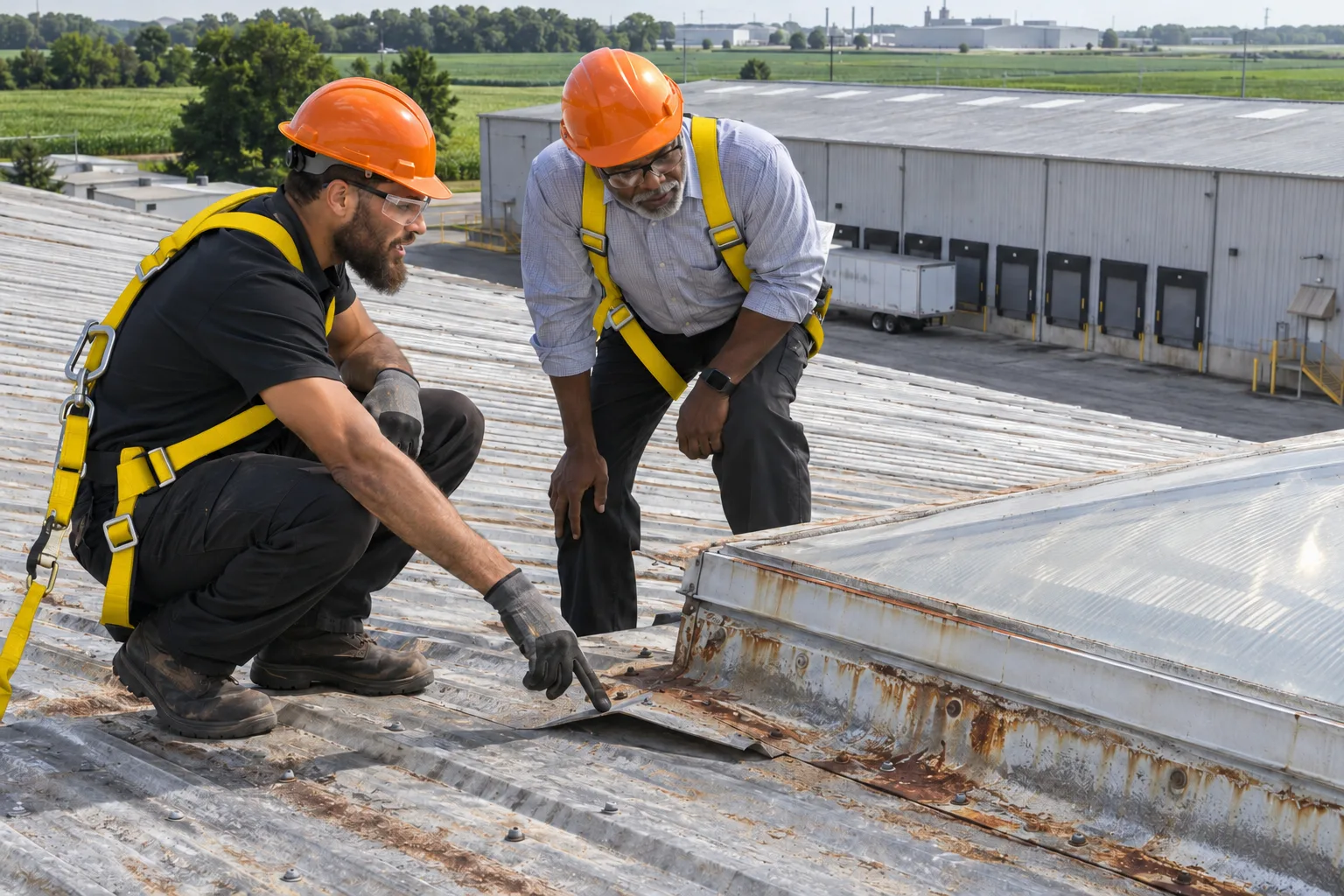
We core the roof to confirm the insulation is dry, check panel attachment, and note every curb, vent, and drain.
Air intakes are shut down or covered, nearby cars are moved, and edges are masked so overspray stays on the roof.
Washing removes dirt and chalk, and primer goes on rusted steel so the foam bonds to clean metal.
Foam goes on in passes on a calm, dry day, with thickness built up at low spots to steer water to drains.
A protective coating goes over the foam the same week to shield it from sunlight, then its thickness is checked.
Foam covers the main roof; these systems handle sections where foam is the wrong call.
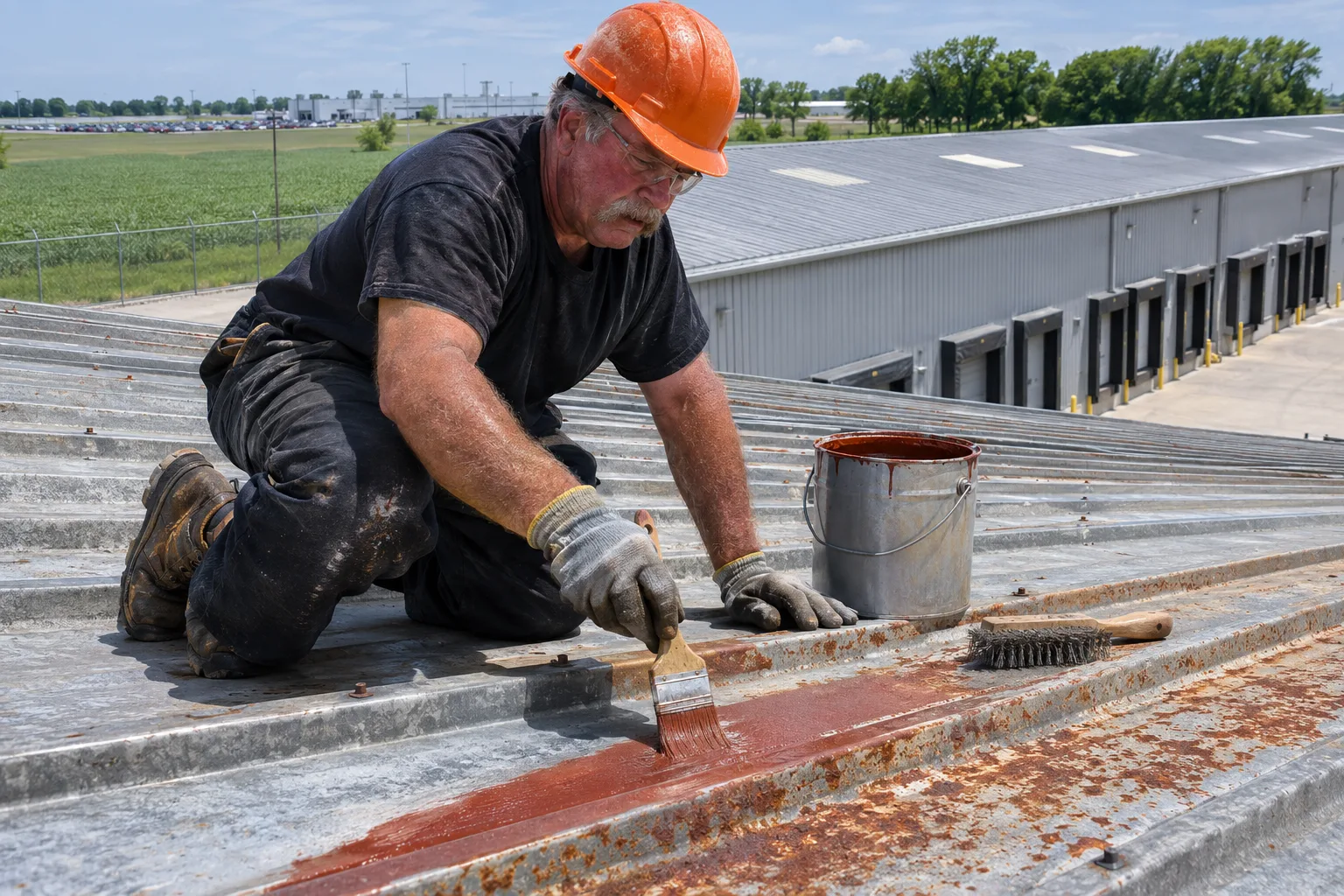
Screws, laps, and rust repaired, then the whole panel roof coated.
Commercial Metal Roof Coating details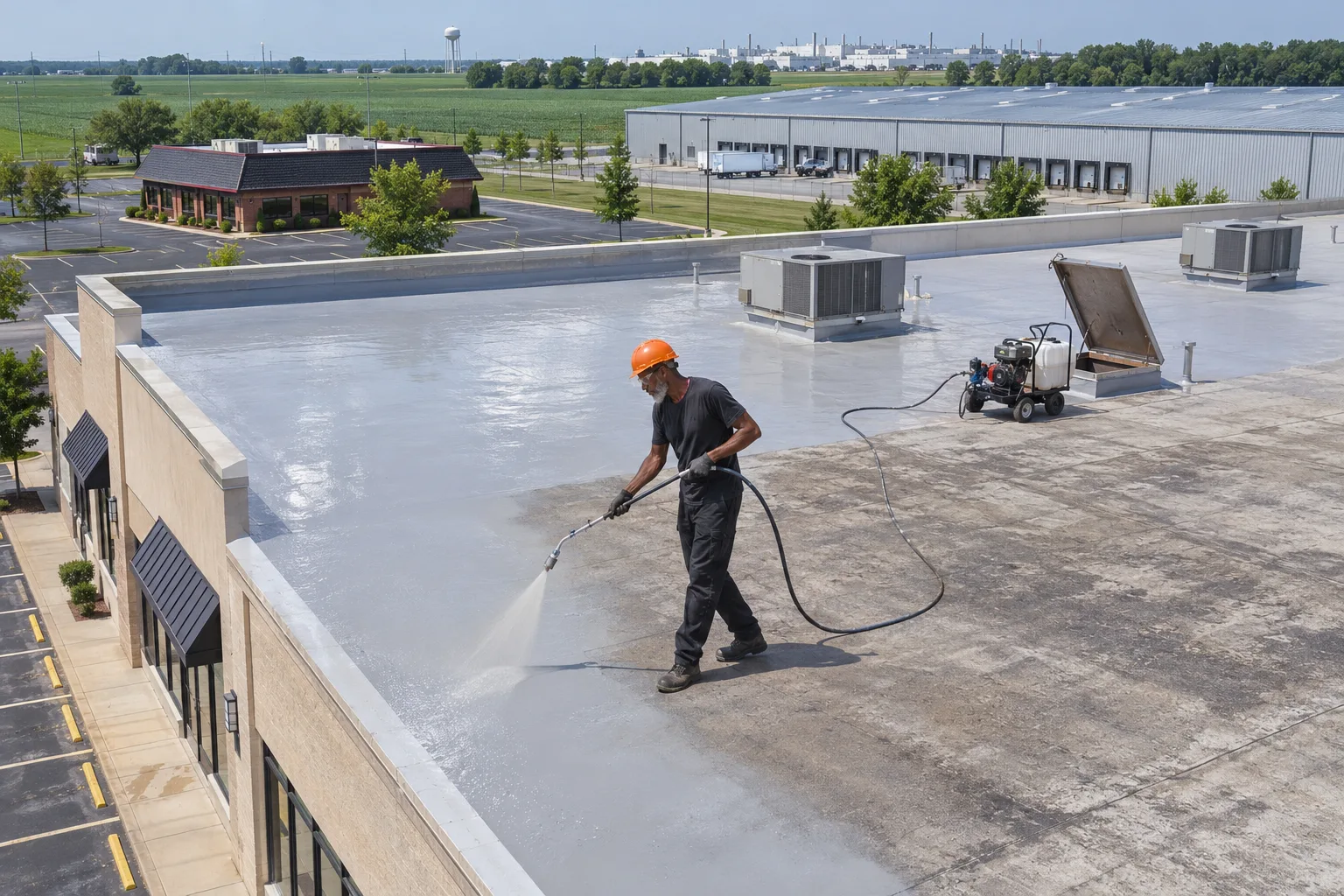
Thick, water-tolerant coating for low spots and flat sections.
Silicone Roof Coating details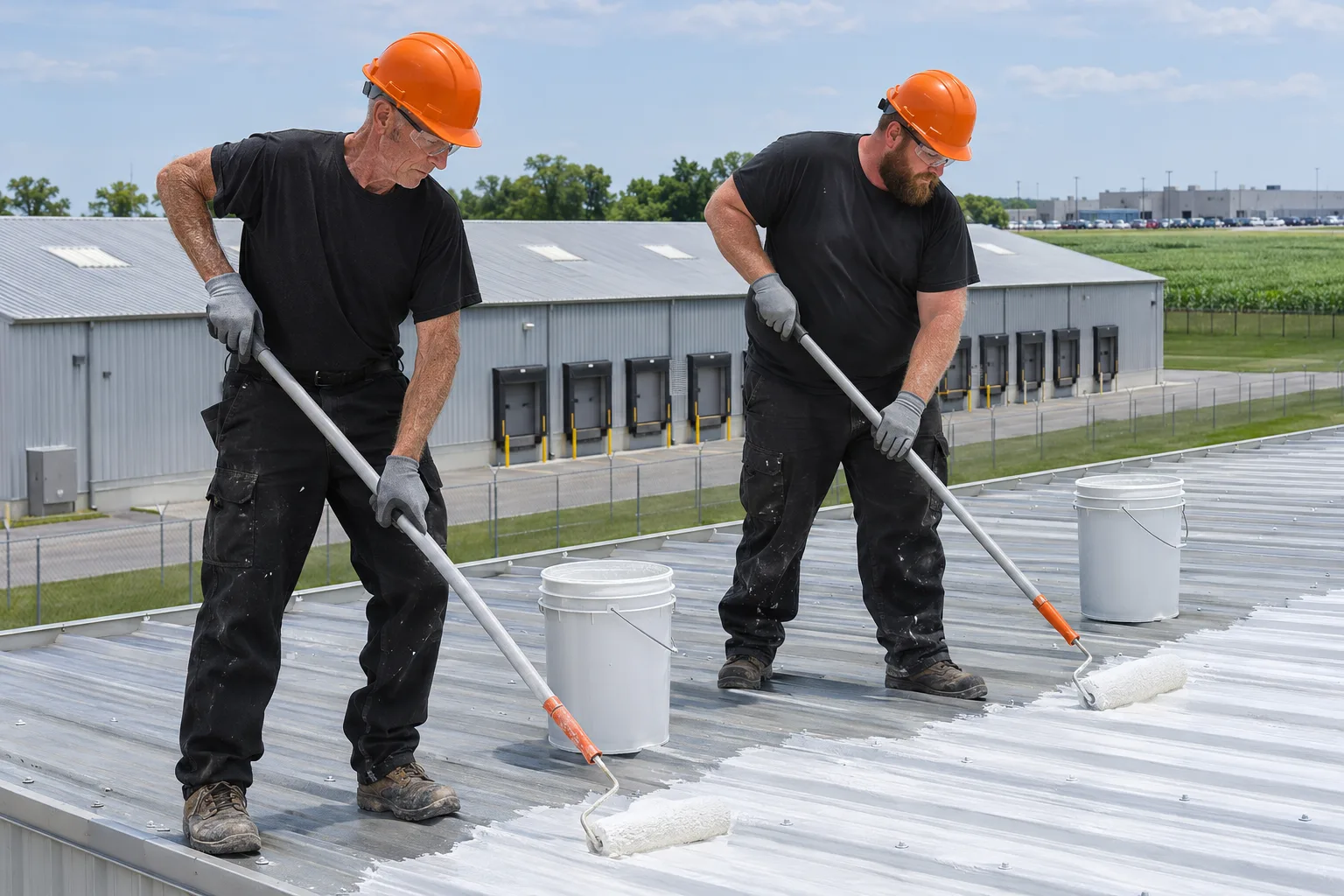
Two reflective coats for sloped panels that drain fast.
Acrylic Roof Coating details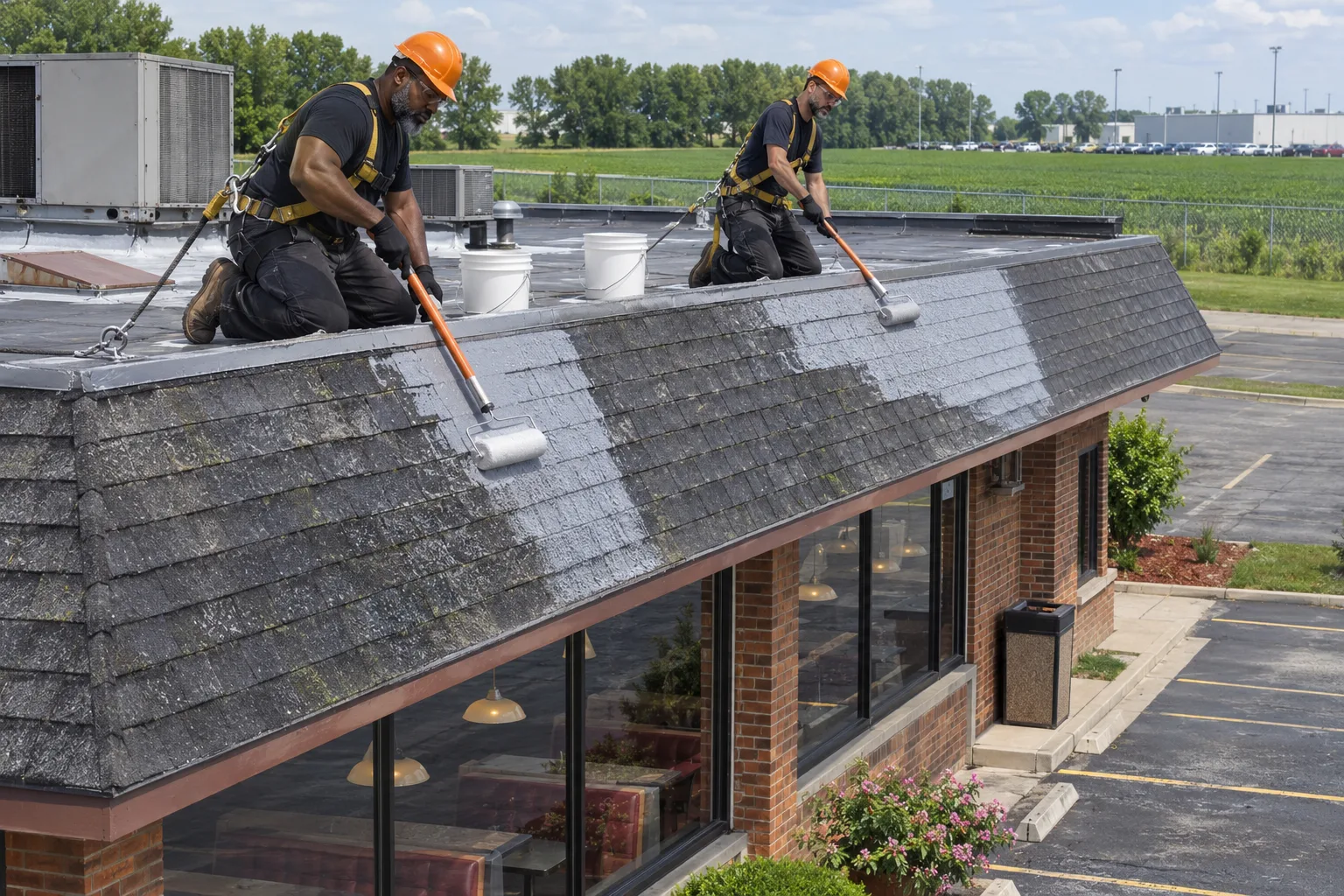
Coating for flat, attached shingles on smaller commercial buildings.
Shingle Roof Coating detailsWhat owners ask before putting foam on a Kokomo roof.
Yes, when it goes over sound, dry panels. Foam lands as one continuous layer across screws, seams, and laps, where metal roofs leak, and a topcoat protects it from sunlight. Wet insulation and rusted-through panels are fixed first, and equipment curbs and drain paths get detailed so water still leaves the roof.
Twenty years or more is common when the topcoat is kept up, and recoating is what keeps it going. Left alone, sunlight breaks exposed foam down. Hail can dent the surface and foot traffic wears the coating near equipment, so inspections after winter and after storms matter, along with foam thickness and coating type.
When the topcoat wears thin, chalks heavily, or shows bare foam, often around 10 to 15 years in, depending on the coating used. Checks after winter and after hail catch wear early. Recoating means cleaning, repairing damaged foam, and adding a fresh coating layer over the existing system with no tear-off.
Yes. Hail can dent metal panels, crack older brittle coatings, and puncture a foam surface. Dents in steel are often cosmetic, but cracks or punctures let water reach the metal or the foam. A roof check after a spring storm shows what needs spot repair and a touch-up coat, and dated photos help with an insurance claim.
On the plus side, foam seals every screw and lap in one layer, adds insulation, stays light, and can be tapered to drains. On the minus side, it needs dry, mild, calm days to spray, overspray needs control near parking, the topcoat needs renewing, and hail or foot traffic can damage it.
Give us the roof size and what sits on top. You get a ballpark range now and a foam-or-coating answer after the roof walk.